Free Shipping (On select items & orders)
  Track My Order


In most kitchens, the fry station is the hardest-working spot in the room. It powers through lunch, survives dinner, and gets pushed to its limit on a Friday night. But what separates a fryer that keeps up from one that falls behind isn't the name on the front panel. It's the BTU rating behind it.
BTU stands for British Thermal Unit. It measures how much heat a gas burner produces per hour. In a commercial fryer, that number controls how fast your oil recovers between loads, how consistent your food quality stays during a rush, and how much revenue your fry station can realistically support.
Get this number wrong and you pay for it. Too low, and you're sending out soggy fries during peak hours. Too high, and you're burning through gas on a fryer that's overkill for what you actually serve.
This guide will help you figure out the right number for your kitchen.
What BTU Means for Your Fryer's Performance
One BTU is the amount of heat needed to raise one pound of water by one degree Fahrenheit. In a commercial gas fryer, the BTU rating tells you how aggressively the burner heats oil, and how quickly it restores cooking temperature after you drop food in.
Two fryers can hold the same amount of oil and look identical on the outside. But if one has 80,000 BTUs and the other has 150,000 BTUs, they will perform very differently during back-to-back orders.
The higher-BTU fryer recovers faster. That means less temperature drop between batches, more consistent crust on your food, lower oil absorption (since properly heated oil seals the exterior quickly), and better throughput overall.
Worth Noting: BTU tells you heat input, not heat efficiency. Two fryers with the same BTU can perform differently based on burner design, heat transfer, and insulation. Always look at recovery time specs alongside the raw BTU number.
Why Oil Recovery Rate Is the Real Metric That Matters
When you drop a load of frozen fries or breaded chicken into hot oil, you're introducing something cold and wet into a high-heat cooking medium. The oil temperature drops, sometimes by 30 to 50°F in seconds depending on load size and starting product temperature.
How fast the fryer brings that oil back up to its set point is called the recovery rate. And recovery rate is almost entirely driven by BTU output.
A low-BTU fryer in a high-volume kitchen means extended recovery times between loads, oil sitting at lower temperatures longer (which increases absorption into food), inconsistent results where the first basket comes out crispy and the second comes out greasy, and a slower line with orders backing up.
This is why matching BTU output to your actual production volume matters more than almost any other spec on the sheet.
If you're comparing fryer types and trying to decide between vented and ventless models, Zanduco's guide to ventless vs. vented fryers covers the key differences, including how each type handles heat output.
Commercial Fryer BTU Ranges: What's Typical?
Not all commercial fryers are built for the same environment. Here's a practical breakdown of what you'll see across the market:
| Fryer Type | Typical BTU Range | Best For |
| Light-Duty Countertop Fryer | 30,000 – 60,000 BTU | Snack bars, cafés, low-volume kitchens |
| Standard Floor Fryer (Single Vat) | 80,000 – 115,000 BTU | Independent restaurants, mid-volume service |
| High-Output Floor Fryer | 120,000 – 150,000 BTU | Full-service restaurants, sports venues |
| High-Efficiency / Tube-Type Fryer | 80,000 – 120,000 BTU | High-volume with better oil life |
| Pressure Fryer | 40,000 – 80,000 BTU | Specialty items (bone-in chicken) |
| Large Vat / Twin Fryer Systems | 150,000 – 300,000+ BTU | Fast food, ghost kitchens, high-capacity kitchens |
These ranges give you a starting point. But the right number for your kitchen depends on a few more variables.
Real Fryers at Each BTU Level From our Range
To put those ranges into context, here are actual commercial fryers available at Zanduco, organized by BTU output:
90,000 BTU 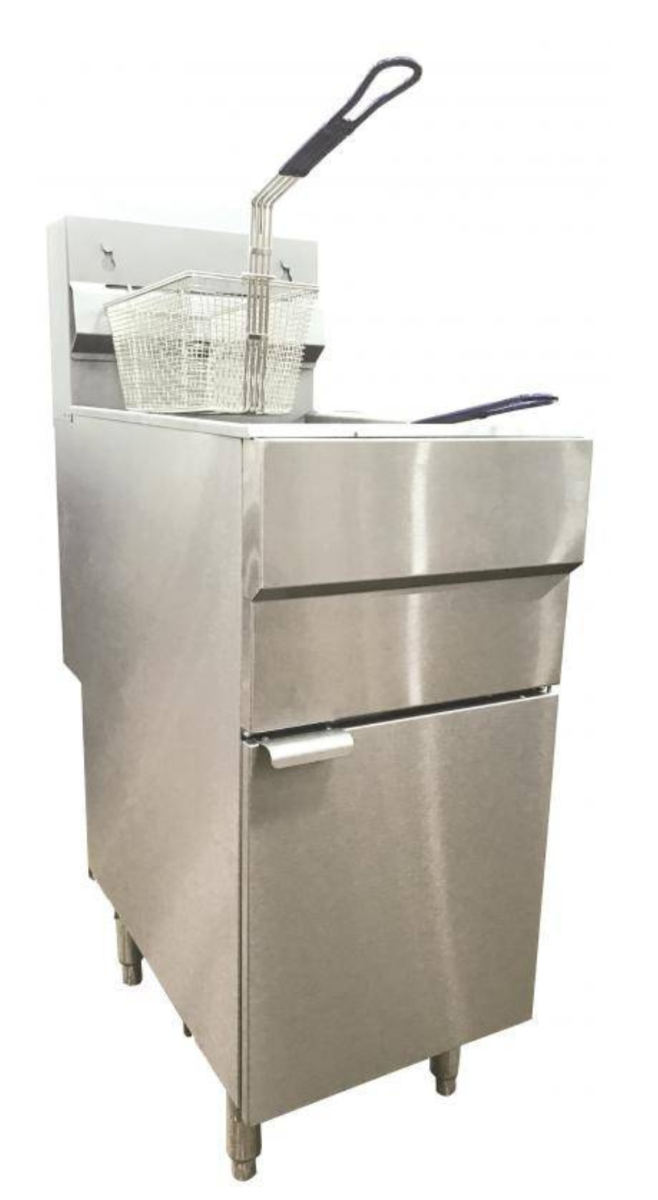
Omcan Floor Fryer, 90,000 BTU
Capacity 35–40 lb
Best For Independent restaurants, mid-volume kitchens
110,000 BTU 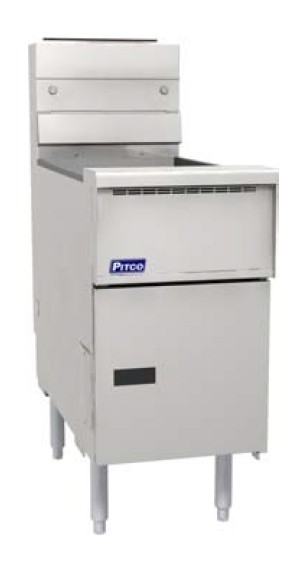
Pitco SG14S Solstice Gas Fryer
Capacity 40–50 lb
Best For Full-service restaurants, tube-fired design with large cold zone
110,000 BTU 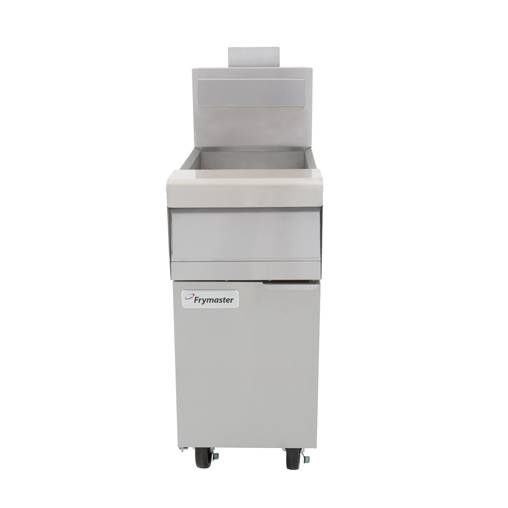
Frymaster MJ140 Gas Fryer
Capacity 40 lb
Best For High-volume frying, Master Jet burner system for even heat
120,000 BTU 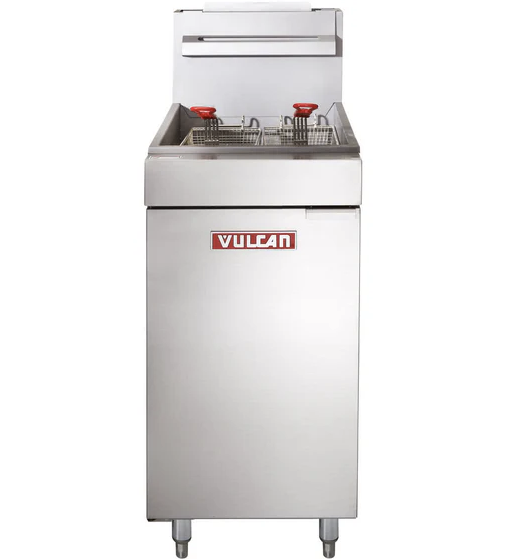
Vulcan LG400 Natural Gas Floor Fryer
Capacity 45–50 lb
Best For Fast casual, ghost kitchens, high-output service
150,000 BTU 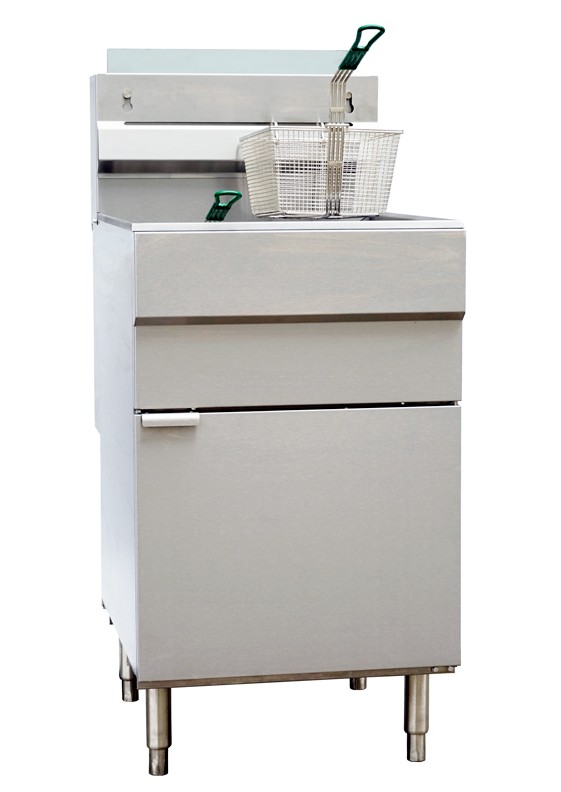
Omcan Floor Fryer, 150,000 BTU
Capacity 70 lb
Best For QSR, ghost kitchens, high-capacity operations
170,000 BTU 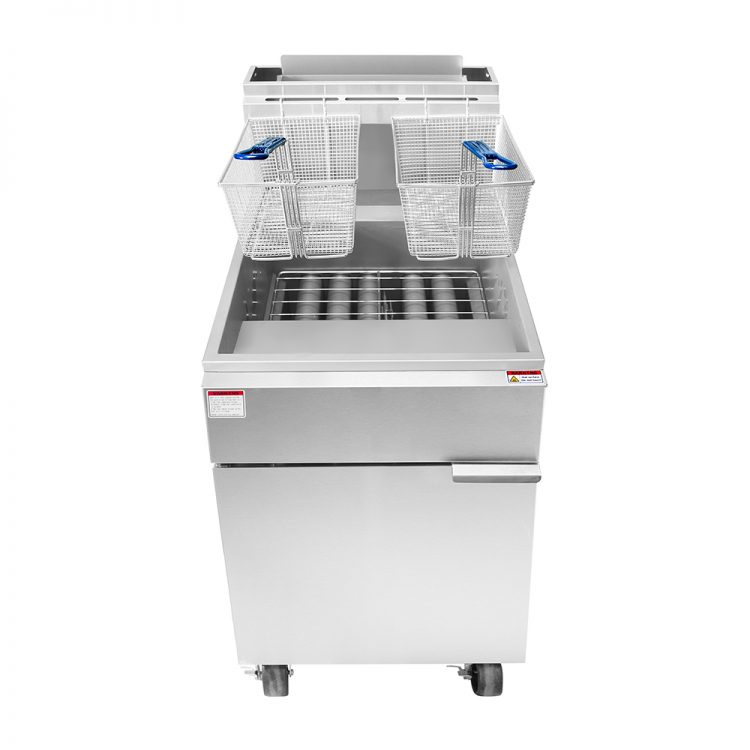
Atosa ATFS-75 Heavy Duty Deep Floor Fryer
Capacity 75 lb
Best For Versatile high-output frying, tube heat exchange design
For electric and ventless countertop options (ideal for cafés, food trucks, or kitchens without hood systems), see the Perfect Fry PFA500 Ventless Fryer or the Globe PF16E Electric Countertop Fryer.
How to Calculate the BTU Rating You Require
Here's a practical framework that equipment buyers and dealers use, and that you should work through before making a purchase.
Step 1: Start With Your Oil Capacity
BTU requirements scale with how much oil a fryer holds. As a general rule, you need approximately 1,000 BTU per pound of cooking oil for adequate recovery performance.
Most commercial fryers hold between 30 and 80 lbs of oil per vat:
- 40 lb vat: Minimum around 40,000 BTU to function, but 80,000 to 100,000 BTU to perform well during service
- 50 lb vat: Aim for 100,000 to 130,000 BTU in a busy kitchen
- 65 to 80 lb vat: 150,000+ BTU if your volume demands it
Step 2: Estimate Your Hourly Load
Think about your busiest hour. How many pounds of product are you dropping per hour?
- Under 10 lbs/hour: A light-duty fryer in the 45,000 to 70,000 BTU range works fine
- 10 to 25 lbs/hour: A mid-range fryer with 85,000 to 115,000 BTU
- 25 to 50+ lbs/hour: A high-output fryer at 120,000 to 150,000+ BTU
Frozen products need more BTU to compensate for the temperature drop on entry. If most of what you fry comes from frozen, adjust upward.
Step 3: Factor In Your Menu
High-moisture products like fresh-cut fries cool oil faster than pre-blanched or lower-moisture items. Bone-in chicken drops the oil temperature more sharply than thinly breaded seafood.
If your fryer runs mostly frozen, high-moisture, or heavy-battered items, err on the side of more BTUs.
Kitchen Planning Tip: If fried items make up 30% or more of your menu, invest the time to calculate BTU needs properly rather than guessing. A $200 difference in fryer price can mean thousands in wasted oil and lost throughput over a year.
Step 4: Continuous Use vs. Intermittent Use
A fryer at a sports bar running nonstop from 4 PM to midnight needs a different spec than a fryer at a hotel breakfast station that runs for two hours each morning. Continuous-use kitchens need faster recovery and more BTU headroom to avoid degradation over long shifts.
Gas Fryer vs. Electric Fryer: A Quick BTU Note
BTU ratings apply specifically to gas fryers. Electric fryers are measured in kilowatts (kW).
If you're comparing a gas fryer to an electric model, here's the conversion: 1 kW ≈ 3,412 BTU/hr. So a 15 kW electric fryer is roughly equivalent to about 51,000 BTU.
Electric fryers are often more energy-efficient at the point of use because the heating elements sit directly in the oil. But they tend to have slower recovery rates compared to high-BTU gas models during peak demand.
For most high-volume commercial kitchens, gas fryers with 100,000+ BTU remain the standard because of their recovery speed and (in many regions) lower long-term operating costs. If energy efficiency is a priority for your kitchen, Zanduco's guide to Energy Star labels can help you weigh the cost-benefit picture.
Common BTU Mistakes to Avoid
Buying Based on Physical Size Instead of BTU
Two fryers can share the same footprint but carry completely different BTU ratings. Always check the spec sheet, not just the dimensions.
Mistake to Avoid: Don't assume a bigger fryer body means a bigger burner. Some large-frame models are designed for oil capacity, not speed. Confirm BTU output before you buy.
Undersizing for Anticipated Growth
If you're opening a restaurant and expect volume to increase in year two, buy for year two. A fryer running at 95% capacity all the time will wear faster and underperform during peak service.
Overlooking Ventilation Requirements
Higher BTU fryers produce more heat and combustion byproducts. Your exhaust hood and ventilation system need to be rated for the total BTU load you're installing. This is a building code and fire code requirement (typically enforced by your local fire marshal and health department), not just a comfort issue. Confirm with your installer that your hood's CFM rating can handle the upgrade before placing the order.
Assuming All 100,000 BTU Fryers Are Equal
BTU output matters, but so does burner design. Tube fryers, open pot fryers, and infrared fryers all distribute heat differently, even at the same BTU rating. Tube-type fryers, for example, have a larger cold zone that reduces oil breakdown, a real advantage for high-use kitchens that need to extend oil life.
BTU Recommendations by Kitchen Type
Quick-Service and Fast Casual
You need speed. Recovery time directly affects ticket time. Look for fryers in the 100,000 to 150,000 BTU range with high-efficiency burner systems. If fries are a major menu item, consider a dedicated fry station with twin vats.
Full-Service Restaurant
Moderate to high volume with less continuous demand than QSR. A fryer in the 85,000 to 115,000 BTU range per vat generally handles typical service. Two vats give you both menu flexibility and built-in redundancy.
Ghost Kitchen or Dark Kitchen
Volume is the whole game here. No front of house means the kitchen is purely a production line. Size up aggressively: 120,000 to 150,000 BTU per vat minimum, with back-to-back fryers if you're running multiple virtual brands.
Cafeteria or Institutional Kitchen
Burst periods at breakfast and lunch, then quiet. A solid mid-range 85,000 to 100,000 BTU fryer handles this well. Consistency matters more here than maximum output speed.
Hotel or Banquet Kitchen
Variable, event-driven demand. A 75,000 to 100,000 BTU fryer per vat works for most setups, unless you're managing large banquet events where you may want higher output available on standby.
Bar or Pub Kitchen
Late-night rushes and appetizer-heavy menus. BTU needs scale with peak-hour demands. 85,000 to 115,000 BTU is the typical sweet spot for this type of kitchen.

Before You Buy: Write down your three busiest hours from last month. Estimate how many pounds of fried product you moved in each. That number, not your average Tuesday, should drive your BTU decision.
What Else to Evaluate Beyond BTU
BTU is one of the most important specs on a commercial fryer. But it's not the only thing that determines whether a fryer is worth owning. Here are a few more factors to weigh:
Oil Capacity: More oil means more thermal mass, which helps maintain temperature stability. But it also means higher oil costs and longer heat-up time.
Burner Design: Open pot designs heat faster but have smaller cold zones. Tube fryers have better cold zones and extend oil life, though they can be harder to clean.
Thermostat Accuracy: A fryer rated for 375°F should hold 375°F consistently. Lower-quality models drift more, which affects both food quality and oil life.
Drain System: Fast, complete draining matters during oil changes between services. A built-in filtration system paired with side-by-side positioning saves both time and oil cost.
Certifications: For US kitchens, look for NSF certification (required by most health departments for food contact equipment), plus UL or ETL listings for electrical safety. These matter during inspections and for insurance purposes.
Warranty and Parts Availability: A fryer that breaks on a Saturday night with no local parts support is a costly problem. Prioritize brands with strong service networks and parts availability.
If you're also evaluating your broader equipment layout as part of a kitchen build-out or renovation, the guide to choosing the right size commercial range covers a similar sizing and placement approach for ranges.
Mini Checklist Before Ordering a Commercial Fryer:

Zanduco's Commercial Fryer Selection
At Zanduco, we carry a full range of commercial deep fryers built for real kitchen demands, from compact countertop models for lighter service to high-output floor fryers designed for kitchens running at full capacity through dinner.
Every fryer in our catalog is selected for performance, durability, and the kind of day-in, day-out reliability that commercial kitchens actually need. We carry trusted brands like Omcan, Frymaster, Pitco, Imperial, American Range, and Perfect Fry, with strong parts support across the US market. Our team understands how equipment performs in real kitchen conditions, not just on a spec sheet.
If you're outfitting a new location, replacing an aging fryer, or scaling up a ghost kitchen, we can help you match the right BTU rating and fryer configuration to your specific setup.
Browse our full selection of commercial deep fryers at Zanduco.com or reach out to our equipment team directly at 1-855-926-3826 for a recommendation based on your menu and volume.
What This All Comes Down To
Buying a commercial fryer without understanding the BTU rating is like staffing your kitchen without checking experience. The number matters, and it matters specifically to your kitchen, your menu, and your service volume.
Use the guidelines in this guide to identify your actual BTU needs, then match that to a fryer built to deliver consistently. Under-spec and you'll fight your equipment every service. Over-spec without the volume to justify it and you're spending money you don't need to.
Get it right and your fry station runs the way it should: clean, fast, and consistent from the first ticket to the last.
Ready to Spec Your Next Commercial Fryer?
Your fry station is only as strong as the equipment behind it. If you're ready to match the right BTU rating, oil capacity, and burner type to your kitchen's real demands, browse Zanduco's full selection of commercial deep fryers. Need help narrowing it down? Call our equipment team at 1-855-926-3826. We'll recommend a fryer based on your menu, volume, and kitchen layout.