 Free Shipping (On select items & orders)
  Track My Order


Frequently Asked Questions
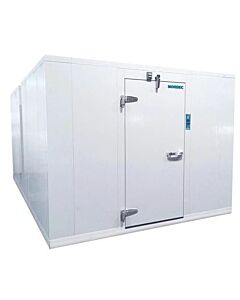
What temperature range does a walk-in refrigerator maintain?
Most walk-in refrigerators hold between 33°F and 41°F, which keeps produce, dairy, proteins, and prep items at safe refrigeration temperatures for commercial kitchens.
How do I decide between a walk-in refrigerator and multiple reach-in units?
Consider your total storage volume. A walk-in refrigerator makes sense when your daily inventory exceeds what 2 or 3 reach-in refrigerators can hold, and it provides easier bulk organization.
Should I choose a walk-in refrigerator with a remote or self-contained refrigeration system?
Self-contained systems on a walk-in refrigerator are simpler to install. Remote systems move heat and noise outside the kitchen, which is better for larger walk-in refrigerators.
Can a walk-in refrigerator be customized to fit my available space?
Yes. Walk-in refrigerators from Curtis use modular panels built in increments, so you can configure a walk-in refrigerator to match your exact dimensions.
Which features matter most when choosing a walk-in refrigerator?
Insulation thickness, door type, and panel construction are the most important walk-in refrigerator features. Ecomate foam insulation provides high R-values with zero ozone depletion.
Are walk-in refrigerators suitable for storing flowers in a grocery setting?
Yes. A walk-in refrigerator set to the right humidity and temperature works for floral storage. For dedicated display, also consider Floral Merchandisers for customer-facing areas.
Do walk-in refrigerators meet NSF and UL safety standards?
Yes. Commercial walk-in refrigerators carry certifications like UL, ETL, and NSF approval, ensuring they meet safety and sanitation standards for foodservice operations.

