 Free Shipping (On select items & orders)
  Track My Order


 1% OFF
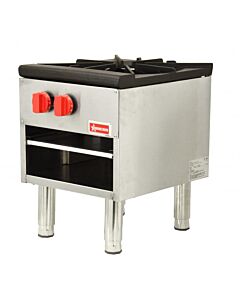
Omcan Single Burner Stock Pot Range 100,000 BTU - Natural Gas with LP Conversion Kit
SKU#: 34000-112Special Price USD $479.00 Regular Price USD $485.72
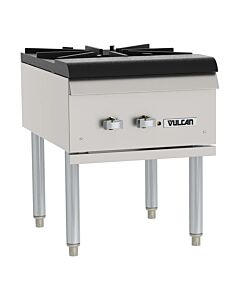
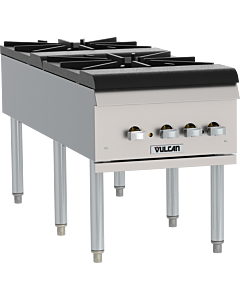
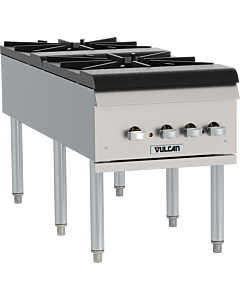
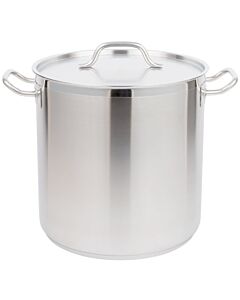
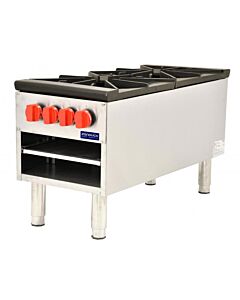
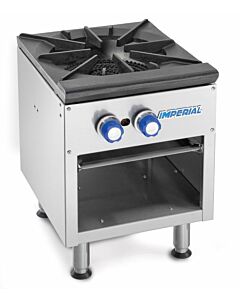
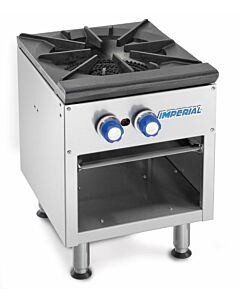
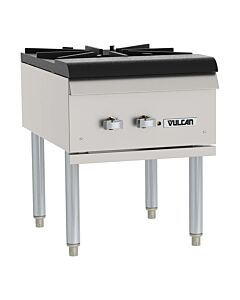
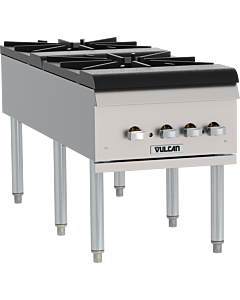
Stock pots are an essential staple in the kitchen of any restaurant, buffet, or cafeteria. Choose the right stock pot range to keep your kitchen's productivity up with the demands of your customers. Their compact size makes it easy to find the best range for your establishment, available with single or double burners to suit your exact needs! Find the perfect model for your establishment from highly-trusted brands like Imperial, Omcan, and Zanduco!
Frequently Asked Questions
What is a Stock Pot Range designed to do that a standard commercial range cannot?
A Stock Pot Range delivers sustained, very high BTU output specifically for running large-volume pots for hours at a time. Standard burners are not engineered for that kind of continuous heavy load.
How many burners do Stock Pot Ranges in this category typically have?
Most Stock Pot Range models here are single or dual burner units. That is all you need since each burner is sized to run a 40- to 60-quart pot at full capacity.
Should I choose a natural gas or liquid propane Stock Pot Range?
Match it to whatever fuel your kitchen already uses. Both natural gas and liquid propane versions are available, and the BTU ratings are comparable across fuel types.
What BTU output should I look for in a Stock Pot Range?
Look for burners rated at 100,000 BTU or higher for serious production work. That level of output is what brings large batches of stocks, soups, and pasta water to temperature efficiently.
Is a Stock Pot Range only useful for large restaurants, or can smaller kitchens benefit too?
Any kitchen producing stocks, soups, or large batches regularly can benefit. A Stock Pot Range frees up your main range burners for line cooking instead of tying them up under a 60-quart pot all day.
Can a Stock Pot Range be used as the only cooking equipment in a small operation?
Not practically. A Stock Pot Range is purpose-built for high-volume pot work and lacks the versatility of a full commercial range. It works best as a dedicated secondary station.
Do Stock Pot Ranges require any special installation considerations compared to a standard range?
They need higher BTU-rated gas connections and proper heavy-duty ventilation due to the intense heat output. Confirm your hood system is rated to handle the load before purchasing.

