Free Shipping (On select items & orders)
  Track My Order



Posted in: Commercial Kitchen Equipment
If you’re looking to expand your restaurant’s offerings by adding a fryer or deep fryer to make a variety of new dishes, or your commercial kitchen or catering company wants to do the same, there are a lot of options out there. But which one will offer the perfect fry? Well, at Zanduco Restaurant Equipment & Supplies, we’ve helped many kitchens find the best fryer for their needs.
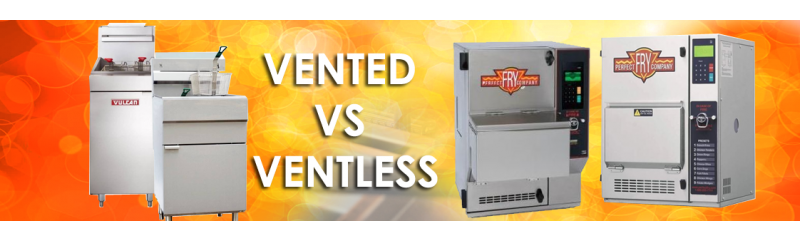
Nowadays, fryers come with both vented and ventless options, so you might be curious about the best choice for you. That’s why we’ve come up with an in-depth guide when it comes to ventless versus vented fryers.
What’s the Major Difference Between Ventless & Vented Deep Fryers?
Although both types of fryers (ventless & vented) will provide you with great fried food, there are some differences between the two that buyers should be aware of before making a decision. One of the primary differences between vented and ventless fryers is, firstly, that vented fryers are designed with two pieces of equipment that need to be installed; ventless fryers only require one.
There are also differences in cost between the two types, as well as various pros and cons when it comes to safety and efficiency. Below, we’ll go in-depth into how the costs compare, as well as when it comes to safety, installation, and all the other aspects of buying a new fryer.
Ventless vs. Vented Fryer Costs
Firstly, when it comes to the cost of investing in new equipment for your restaurant or commercial kitchen, you’ll want to consider the cost and efficiency of what you’re buying and how it relates to the dish/dishes you’ll ultimately be serving; will they even out? Sure, buying a fryer, whether vented or ventless, will be an initial investment, but you also need to consider the installation costs on top of that. Will you need to renovate your kitchen to install a ventilation system with your fryer? Perhaps you might need to buy an extra exhaust hood; both are things to consider.
Vented fryers are certainly more inexpensive than ventless options at first glance, but if you have to renovate your kitchen or install a new exhaust system, ventless ones can be a more attractive option for some.
Ventless vs. Vented Maintenance
| Maintenance Area | Ventless Fryers | Vented Fryers |
| Daily Cleaning | Requires routine cleaning of the fryer unit and surrounding surfaces | Requires fryer cleaning plus grease management around open areas |
| Filtration | Built-in filters must be cleaned or replaced on a set schedule | No internal filtration; relies on external ventilation |
| Ventilation System | No external hood or ductwork to maintain | Requires regular hood and duct cleaning |
| Odor & Air Control | Depends on proper filter maintenance | Managed through exhaust hoods and ducting |
| Compliance & Inspections | Equipment inspections focus on the fryer and filtration system | Includes fryer, hood, ductwork, and fire suppression inspections |
| Long-Term Upkeep | Maintenance is centralized within the unit | Maintenance is spread across fryer and ventilation infrastructure |
Ventless fryers concentrate maintenance inside the unit, making upkeep more predictable. Vented fryers distribute maintenance across both the fryer and the ventilation system, which can add cleaning costs and scheduling considerations over time.
Safety Concerns
There are also some safety concerns to keep in mind that can help you make up your mind about the two types of fryers. Firstly, vented fryers are open, which can cause burns for your employees if they’re not careful and also be a fire hazard if not operated properly. Carbon monoxide emissions are another issue for both fryers; when things fry they emit carbon monoxide, which is why vented fryers require a vent in the first place.
Additional Pros & Cons of Ventless Fryers
Since ventless fryers are a relatively new thing in the restaurant industry, we wanted to go over a few more of the pros and cons to give you all the latest info.
Ventless Fryer Pros
- Longer Oil Life: One of the foremost advantages of investing in a ventless frying system is that the oil will last much longer. This is because ventless ones are fully enclosed so no fumes escape during the frying process; this also means no air or dust will get into your frying oil. Airborne dust and debris are the two biggest causes of oil deterioration, but you can avoid this with a ventless fryer. It will also ensure the best-tasting food for your customers.
- Minimal Space Requirements: Another attractive factor of ventless fryers is the amount of space they can save in your commercial kitchen or restaurant. Traditional vented fryers will need space for a hood and ventilation system, but ventless ones require no overhead space. This translates into additional storage space for your kitchen, which is especially useful for smaller one. Ventless fryers can be placed upon a countertop or the floor, depending on your space and size requirements.
- Reduced Insurance Costs & Employee Safety: One of the big factors that make a ventless fryer attractive for many is the reduced insurance costs that come along with them. This is because they offer enhanced employee safety. You’ll be able to minimize kitchen burns when it comes to oil at least, and most ventless frying machines come outfitted with their own fire safety and suppression systems. They’re designed to stop a fire from spreading throughout your kitchen.
- Consistent Quality: Since ventless fryers offer automated systems and are completely enclosed, there’s no chance that your food quality will suffer from letting something cook too long. They eliminate any chance of human error, providing your kitchen with a more consistent quality of food. Many also come equipped with technology that will adjust cook times for the amount of food being fried, to ensure the highest quality results.
Ventless Fryer Cons
- Regular Maintenance: Because of their specialized design, ventless fryers do require some maintenance, like all kitchen equipment. You’ll need to change the filters on a regular basis and invest in regular equipment inspections and repairs. However, with vented systems, you also need to perform regular maintenance, so the maintenance cost difference between the two is minimal.
- They’re More Expensive: When compared to vented frying systems, ventless options are typically more expensive. This is because vented options aren’t equipped with an internal ventilation system.
- Some Food Can’t Be Fried: One of the biggest downsides to ventless frying systems is that it may lessen your options when it comes to frying some foods. Certain dishes that need to be watched closely, flipped, or specially fried using other unique cooking techniques simply aren’t possible with an enclosed frying system.
FAQs
Where Can I Purchase a Ventless Fryer?
At Zanduco Restaurant Equipment & Supplies, we carry a wide range of commercial fryers, including two of today’s leading ventless frying systems.
What is a commercial deep fryer?
It’s the fryer you see in real kitchens, not at home. It’s built to run all day, recover heat quickly, and keep food cooking evenly even during a rush. That’s the difference.
Do you throw away oil after deep frying?
No. Oil gets filtered and reused until it’s done. When it smells off, turns dark, or starts smoking too fast, that’s when it goes. Tossing oil after every use would be a huge waste.
What are common problems with fryers?
Most issues come down to oil and upkeep. Dirty oil, clogged filters, slow heat recovery, or food cooking unevenly. It’s usually not the fryer failing, it’s maintenance getting skipped.
What fryer does not need a hood?
Ventless fryers. They’re built with internal filters, so you don’t need an exhaust hood. That’s why they’re popular in food trucks, small kitchens, and places where adding ventilation isn’t an option.
What is the life expectancy of a commercial fryer?
With proper cleaning and routine maintenance, a commercial fryer can last anywhere from 7 to 10 years, sometimes longer. Units that are filtered regularly and not pushed beyond their capacity tend to stay reliable far longer than neglected ones.