Free Shipping (On select items & orders)
  Track My Order


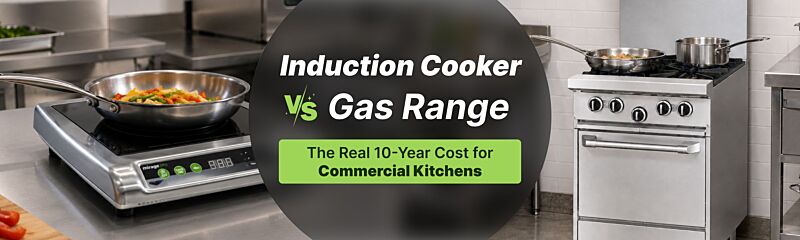
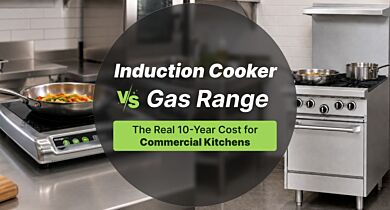
A new cookline is a five-figure decision, and most owners make it on the sticker price alone. That is the expensive mistake, because the cheapest range to buy is rarely the cheapest to own, and the most efficient one is not always the cheapest to run. Here is the full cost picture for gas versus induction, with the math on the table.
The 30-second verdict
If you only read one paragraph: a gas range is almost always cheaper to buy, and in most US markets natural gas is cheap enough per unit of energy that gas can even win the monthly fuel bill, despite being far less efficient. Induction's case is not usually a lower fuel bill. It is a cooler kitchen, faster cooking, near-zero wasted heat, price stability, and easier installs where no gas line exists. Choose gas if you are replacing equipment in a gas-plumbed space and your menu leans on open flame. Choose induction if you are building new, running long hours, fighting kitchen heat, cooking precision-driven food, or working in a space where running a gas line is impractical. For many kitchens, the smartest answer is both: a gas backbone plus a couple of induction burners.
Everything below shows the math behind that verdict, with the assumptions on the table so you can plug in your own numbers.
Your final call still depends on your local rates, cook hours, and code. Run the numbers first.
Compare real US models of Commercial Ranges & Induction Cookers at Zanduco
Why The More Efficient Cooker Can Cost More To Run
Almost every "induction saves money" article quietly assumes that the more efficient appliance has the lower running cost. In commercial kitchens, that is often false, and understanding why is the whole game.
Two facts are both true at the same time:
Induction is dramatically more efficient. According to ENERGY STAR, induction transfers about 85% of its energy into the cookware, compared with only about a third for gas cooking, which loses most of its heat to the surrounding air. That efficiency is built into the hardware: a unit like the Vollrath Mirage Pro induction range is rated around 90% efficient against roughly 50% for a typical gas range. Independent work referenced in US Department of Energy and Pacific Northwest National Laboratory analysis has found gas cooking appliances can consume roughly twice the energy of electric equivalents at full load.
Electricity costs far more per unit of energy than natural gas. At current US commercial averages reported by the Energy Information Administration, about 14 cents per kWh for electricity and roughly $11 per thousand cubic feet for natural gas (around $1.05 per therm), electricity costs close to four times as much per BTU delivered to the appliance.
Put those together and the efficiency advantage and the price disadvantage collide. Induction uses about half the energy, but each unit of that energy costs roughly four times as much, so on raw fuel alone gas usually comes out cheaper. That is the number most guides get wrong by comparing nameplate power instead of cost per unit of useful heat.
This is not an argument against induction. It is the reason induction's real payoff has to come from somewhere other than the fuel line, which the cost model below makes explicit.
The Transparent 10-Year Cost Model
Total cost of ownership for a cooking station breaks into four layers. Sticker price is only the first.
Layer 1, acquisition
Gas ranges are mature, simple equipment, and the price reflects it. A full commercial gas range puts a whole cooking line in one unit. Induction is usually sold by the burner, so building a multi-zone induction line one unit at a time can match or exceed a comparable gas range. Either way, size the platform to your menu first, not the other way around. Our companion guide on choosing the right size commercial range walks through burner count and footprint before you ever compare fuel types.
Layer 2, energy
The running cost, calculated properly below. Direction depends on your local electricity-to-gas price ratio.
Layer 3, infrastructure
Gas needs a gas line and the ventilation that goes with combustion. Higher-output induction often needs 208 or 240V service. Whichever your building lacks is the expensive one.
Layer 4, the hidden costs
Induction-compatible cookware (magnetic-base pans only), added air-conditioning load from a hotter kitchen with gas, and maintenance. These rarely appear in a quote and routinely decide the real total.
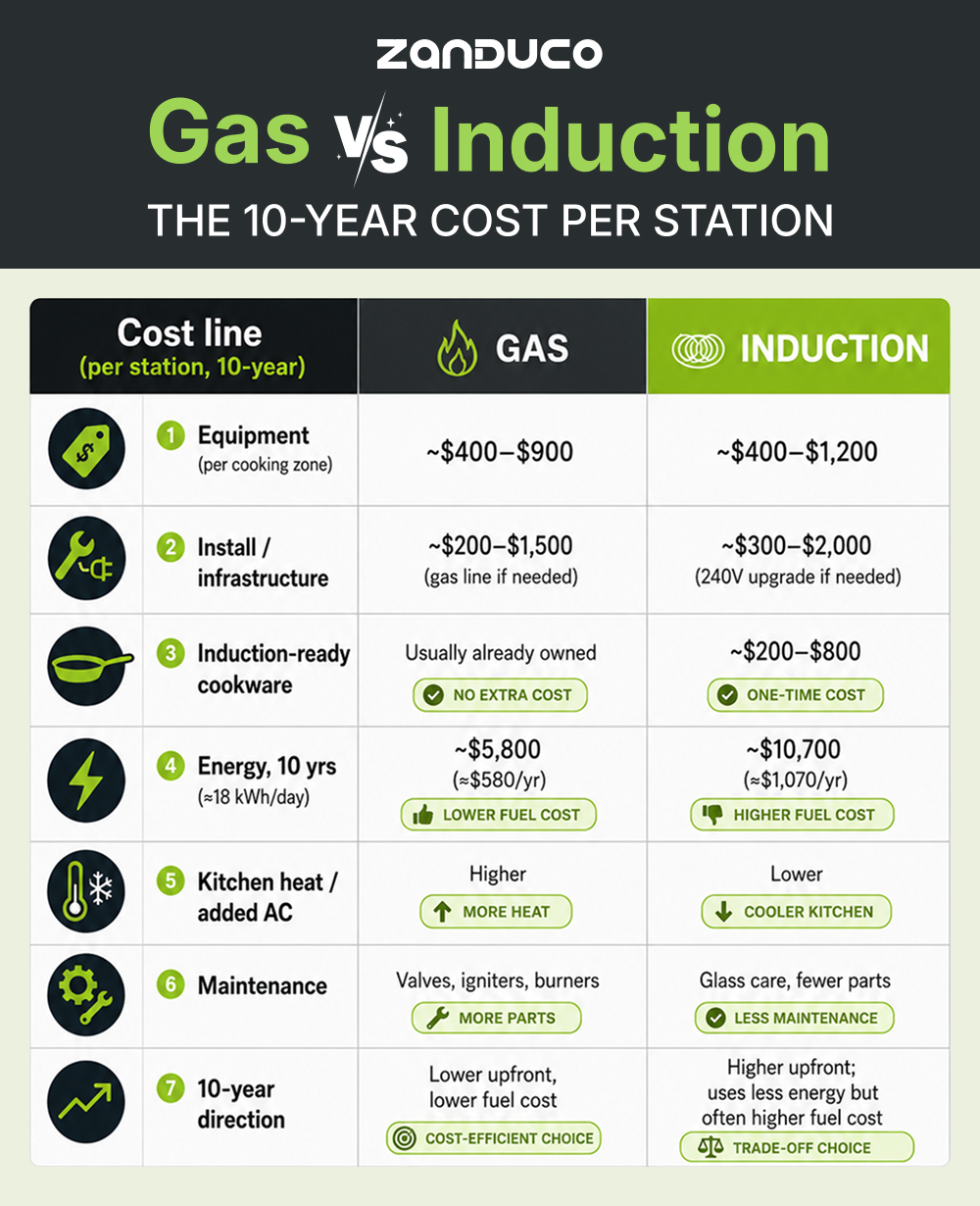
Energy uses US commercial average rates (EIA) and equal cooking work; figures swing widely by region and hours. Induction uses less energy but usually costs more on the fuel line. Its payback comes from a cooler kitchen, faster cooking, and price stability.
How We Calculated This
So you can check the math and substitute your own figures, here is exactly how the worked example below is built:
- Basis: equal useful cooking energy delivered to the food, about 18 kWh-equivalent per day for one busy station. This is the fair comparison, because it holds the actual cooking work constant rather than comparing nameplate wattage.
- Efficiency: induction 85% (ENERGY STAR figure); gas 40% (deliberately generous to gas, since ENERGY STAR cites closer to one third).
- Rates: about $0.14 per kWh and $1.05 per therm, the current US commercial averages reported by EIA. Commercial rates vary enormously by state, from under 9 cents per kWh in the cheapest states to over 35 cents in the most expensive, so pull your own from a recent bill.
- Run schedule: about 360 operating days per year.
- Conversions: 1 therm = 100,000 BTU; 1 kWh = 3,412 BTU.
Don't think of these as quotes, these are just planning figures.
What It Costs On A Real Station
One busy station, 18 kWh of useful cooking energy delivered per day.
| Gas burner (40% efficient) | Induction (85% efficient) | |
| Useful energy delivered/day | 18 kWh (61,400 BTU) | 18 kWh (61,400 BTU) |
| Input energy needed/day | ~1.54 therms | ~21.2 kWh |
| US commercial rate (EIA) | ~$1.05/therm | ~$0.14/kWh |
| Fuel cost/day | ~$1.61 | ~$2.97 |
| Fuel cost/year (~360 days) | ~$580 | ~$1,070 |
In this scenario, gas wins the fuel line by close to $500 a year, even though induction burns about half the energy. The reason is the per-BTU price gap: at current US commercial averages, electricity costs about four times as much per unit of energy, which more than erases induction's efficiency lead. Effective cost per unit of useful heat works out to roughly $2.63 for gas versus $4.83 for induction in this example.
In the buying questions our team fields most often, this is the exact point that catches owners off guard. They expect the more efficient appliance to be the cheaper one to run, and on the monthly fuel bill, at typical US commercial rates, it usually is not.
So why would anyone pay more to run induction? Because the fuel bill is not the whole bill.
What Changes The Math For You
The example above is one rate environment. Move any of these levers and the verdict can flip.
Your electricity-to-gas price ratio
This is the lever that can flip the whole verdict, and it swings hard by location. EIA commercial electricity averages run from under 9 cents per kWh in low-cost states to over 35 cents in the most expensive, so in cheap-power regions, or where natural gas happens to be costly, induction's per-BTU penalty shrinks or disappears and it can win outright. Run your own rates before deciding.
Cooling load
Gas dumps most of its heat into the room. In a hot climate or a tight kitchen running long summer hours, that extra air-conditioning cost is real and lands on a different line of your utility bill than the cooking fuel. Induction's cooler operation is a genuine, if hard-to-meter, saving.
Cook hours and throughput
Induction heats and recovers faster, so the unit spends fewer minutes drawing power per dish. The longer your service day, the more that compounds.
Rebates
Under the 2022 Inflation Reduction Act, states are rolling out rebate programs for efficient electric cooking equipment, and many utilities offer commercial efficiency incentives. These lower induction's upfront cost, not its running cost, but they can change the payback math.
The honest break-even reality: in many US markets at current rates, induction does not pay back on fuel cost alone. Its case rests on the cooler kitchen, faster cooking, staff comfort, price stability against gas volatility, and future-proofing. If a salesperson promises fuel-bill payback without knowing your rates, be skeptical.
Total Cost Picture By Kitchen Type
| Your operation | Typically better fit | Why |
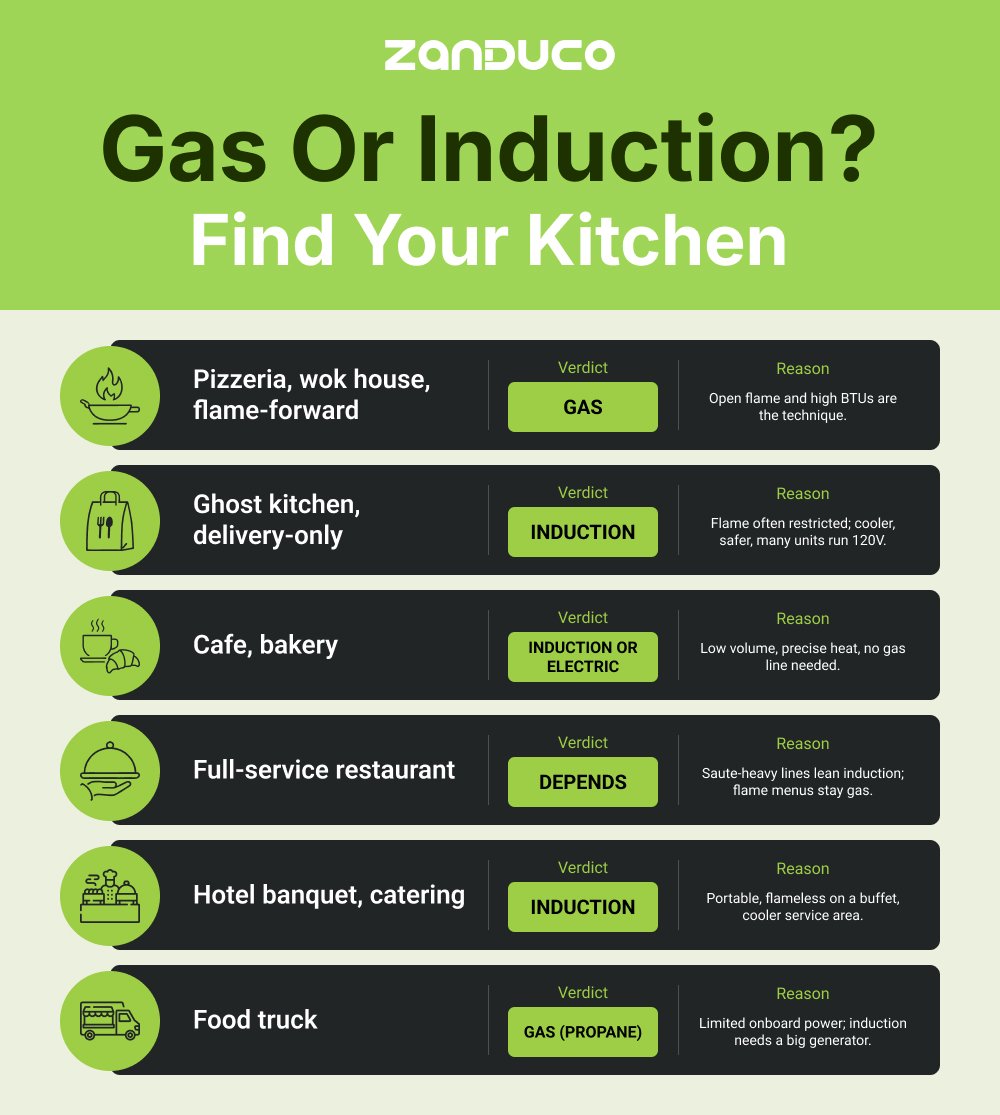
| Pizzeria, wok house, flame-forward | Gas | Technique and high BTU output favor open flame; cooks expect it |
| Ghost kitchen, delivery-only | Induction | Flame often restricted in shared or converted space; cooler, safer, many units run 120V |
| Cafe, bakery | Induction or electric | Lower volume, precision tasks, no gas line required |
| Full-service restaurant | Depends on volume and menu | Heavy saute and sauce lines can justify induction; flame menus stay gas |
| Hotel banquet, catering | Induction | Portable, flameless on a buffet, cooler service area |
| Food truck | Gas, usually propane | Limited onboard power; high-output induction needs a large generator |
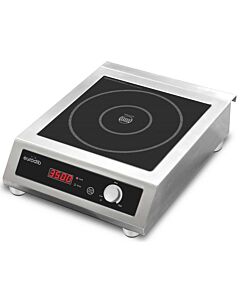
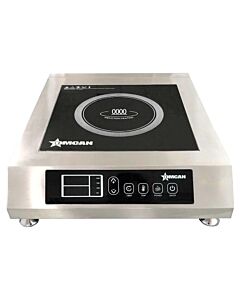
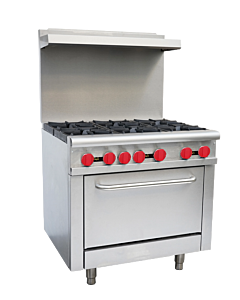
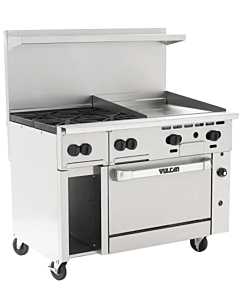
A few real models anchor those picks. Ghost kitchens often start with a plug-in unit like the Eurodib CI1800 (120V), while high-output stations reach for the Eurodib SWI3500 (3500W) or a budget-minded prep unit like the Omcan super-wide 3.4kW cooker. On the gas side, a Zanduco 36-inch 6-burner range or a heavy-duty Vulcan Endurance 48-inch range with griddle covers a full line, and bakeries without a gas line can look at a commercial electric range.
The Things Cost Alone Won't Tell You
Money decides a lot, but these often decide the rest.
Kitchen heat and staff retention
A gas line in July is brutal. Induction keeps ambient heat down, which matters for comfort, turnover, and the morale of a line cook on hour ten.
Speed
Induction brings water to a boil noticeably faster and responds instantly to control changes, which helps throughput during a rush.
Safety and air quality
No open flame and a surface that stays relatively cool reduce burn and fire risk. ENERGY STAR also points to improved indoor air quality from not combusting gas indoors.
Cleanup
A flat glass induction top wipes down in seconds. Gas grates and burners do not.
The cookware tax
Induction only works with magnetic-base, induction-ready pans. If a magnet does not stick to the bottom, the pan will not heat. Re-outfitting a station is a real line item, so check your current set against the induction-ready commercial cookware options before assuming a clean swap.
Resilience
Gas with manual ignition keeps cooking in a power outage. Induction does not. Some kitchens keep one gas line purely as a backup.
Flame technique
Wok hei, direct charring, and certain pizza styles genuinely need flame. No induction unit replicates that.
Certifications, Hoods & The Gas-ban Trend
This is where misinformation spreads fast, so here is the careful version.
Certifications to require
Look for NSF certification for food-contact sanitation and a UL or ETL listing for electrical or gas safety. To carry the ENERGY STAR label, commercial cooktops generally must meet a minimum cooking-efficiency threshold, which in practice points you toward induction and high-efficiency electric. Our companion guide on certifications explains what the rating actually measures so a rebate claim holds up.
Ventilation
NFPA 96, the standard for ventilation control and fire protection of commercial cooking operations, governs hoods and fire suppression for cooking that produces grease-laden vapors. Many local codes adopt it. Crucially, the trigger is grease and smoke, not fuel type, so high-heat induction cooking can still require a hood. Confirm with your local authority before you assume induction lets you skip ventilation, and our commercial kitchen design guide on space planning and code compliance covers how to plan hoods and utilities before the walls go up.
The gas-restriction trend, with the part most articles get wrong
Cities and states are tightening rules on fossil fuel in new construction. New York City's Local Law 154 and a similar New York State law restrict gas equipment in many new buildings, phasing in by building size. But both currently carve out explicit exemptions for commercial kitchens. So the headline "gas is being banned in restaurants" is, as of now, not accurate for most foodservice operations. What is true: the policy direction is toward electrification, exemptions could narrow over time, and shared or mixed-use new buildings may still push you toward electric. If you are building new, check your local code rather than relying on a national rumor.
The Five Questions That Decide It For You
Is your space already plumbed for gas?
Yes leans gas. No, and you would pay either way, which levels the field.
Does your menu need open flame?
Wok and char work leans gas. Sauces, simmering, and holding lean induction.
How many hours a day do you cook?
Long hours amplify induction's efficiency and speed advantages.
How brutal is your kitchen heat?
If your AC is already losing the fight, induction's cool operation is worth real money.
What is your local electricity-to-gas price ratio?
Cheap power tilts toward induction; cheap gas tilts toward gas. This is the lever most people never check.
If you answered "gas" on 1 and 2 but "induction" on 3 and 4, do not force one platform. A gas backbone with two induction burners for precision and holding is usually the right call.
So, Which Should You Buy?
The cheapest range on day one is rarely the cheapest range over ten years, but the most efficient cooker is not automatically the cheapest to run either. In most US markets, gas still wins the raw fuel bill, and induction earns its keep through a cooler kitchen, faster service, safer operation, and protection against gas price swings and a slowly tightening regulatory future.
Run the five questions, drop your own utility rates into the model, and add cookware and wiring before you compare. Then buy the platform that fits how your kitchen actually cooks, not the one that won the argument online.
Price It For Your Kitchen, Then Build Your Line With Zanduco
Once you've run your own rates through the model above, Zanduco can turn the decision into the right equipment. Compare real US models side by side in commercial ranges and induction cookers, lean on our team to size a line to your menu and your panel, and request a quote when you're ready. Zanduco has equipped US foodservice kitchens since 2013, backs orders with a price-match guarantee, and ships fast across the US. Tell us your space and your menu, and we'll help you spec a cookline that fits both your kitchen and your budget.