Free Shipping (On select items & orders)
  Track My Order


You walk into a kitchen supply showroom, point at three reach-in refrigerators that look almost identical from ten feet away, and ask the salesperson which one you should buy. The answer you get depends entirely on who is selling. The True rep talks build quality. The Traulsen rep talks longevity. The Hoshizaki rep talks airflow. The Zanduco rep talks direct sourcing and price-to-spec. None of them are lying. They are each describing the brand's actual strength, which is exactly why this decision trips up so many buyers.
Commercial refrigeration is the single largest electrical load in most foodservice kitchens, and a reach-in you pick today will outlive at least one lease, one menu refresh, and possibly one partner. Picking the wrong brand does not cause a dramatic failure. It causes a slow, expensive drip of service calls, gasket replacements, energy bills, and that quiet anxiety of wondering whether the line cook actually closed the door. Picking the right one disappears into the background and lets you forget it exists.
This guide compares the three brands buyers most often shortlist in the US market: True, Traulsen, Hoshizaki, and Zanduco. Each has earned its reputation honestly, and each wins in a different scenario.
Quick answer: True is the safest default for independent restaurants that want reliable, NSF-rated cold storage with strong parts availability. Traulsen is the heavy-duty, long-haul choice for institutional kitchens, hotels, and 24/7 operations that grind equipment hard. Hoshizaki suits operators who care most about consistent airflow, food shelf life, and ENERGY STAR efficiency. Zanduco is the house-brand value pick for new restaurants, budget-conscious buyers, and operators who want direct sourcing without a premium-brand markup. Your final pick depends on duty cycle, budget, and how long you plan to keep the unit.
What Separates One Commercial Fridge From Another
All three brands push cold air around food at 33°F to 41°F. The science is identical. What separates them is execution: how the refrigeration system handles real-world abuse, how evenly cold air reaches the back of the cabinet, how quickly temperature recovers when a line cook props the door open for two minutes during dinner rush, and how parts and labor add up over a decade.
Three components matter most when you compare brands:
The compressor is the heart. Bottom-mount compressors stay cleaner and pull cooler intake air, ideal for greasy or hot kitchen environments. Top-mount compressors stay above floor-level debris and are easier to service, better for tight back-of-house spaces. True and Traulsen offer both, while Hoshizaki tends toward top-mount on its Steelheart line. Zanduco units use bottom-mount compressor designs across most of its reach-in lineup, which suits hot kitchen environments well.
The airflow system decides whether the food at the back of the bottom shelf is the same temperature as the food at the front of the top shelf. Hoshizaki built its reputation on a louvered duct airflow design that pushes cold air to every shelf. True uses forced-air with self-closing doors. Traulsen uses a balanced refrigeration system designed for institutional duty cycles. Zanduco uses a forced-air refrigeration system with digital temperature control and self-closing doors.
The insulation, gasket, and door assembly is the boring part that determines your energy bill. All three brands meet NSF and UL or ETL standards for commercial use. The difference shows up over five years of cumulative door openings, when cheaper gaskets warp and start letting cold air leak.
Buyer Tip: Before you compare brands, decide whether you need a reach-in, an undercounter, a prep table, or a merchandiser. Each format has its own logic, and our companion guide on choosing the right reach-in freezer or refrigerator walks through capacity and configuration independent of brand.
Why True Is the Default for Most Restaurants
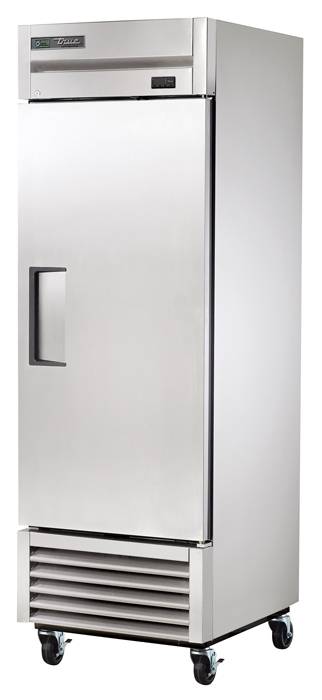
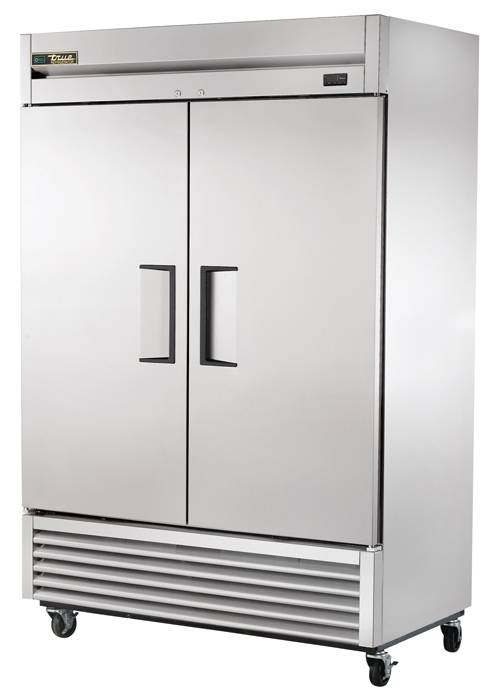
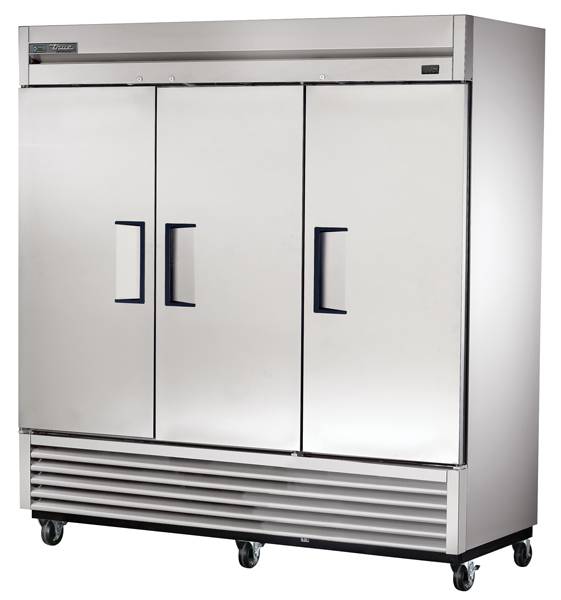
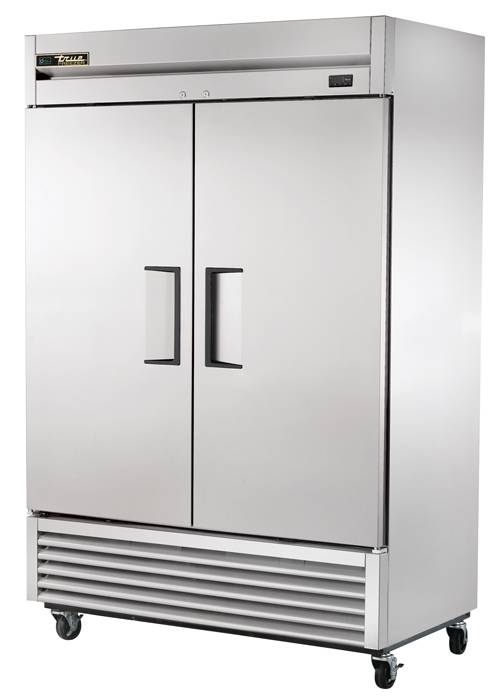
True is the brand most North American restaurant buyers default to, and the reputation is earned. The company has been building commercial refrigeration in the US since the 1940s, and the product line is engineered for the realities of restaurant work: positive-seal self-closing doors, lifetime-guaranteed torsion door hinges, PVC-coated heavy-duty shelves, and a sealed stainless steel interior with coved corners that you can actually clean.
True's reach-ins use environmentally friendly R290 hydrocarbon refrigerant with zero ozone depletion potential and very low global warming potential. The forced-air refrigeration system holds 33°F to 38°F across the cabinet, which is the sweet spot for most fresh food storage. The build quality is what makes True the default: the same model purchased today will look mechanically familiar to a technician five or ten years from now, and replacement parts are available through almost every refrigeration service company in the country.
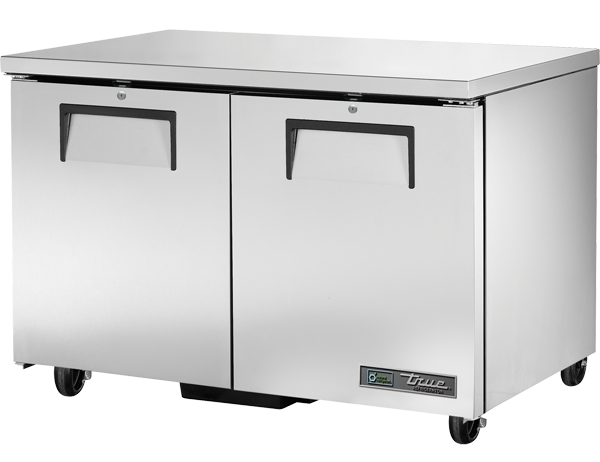
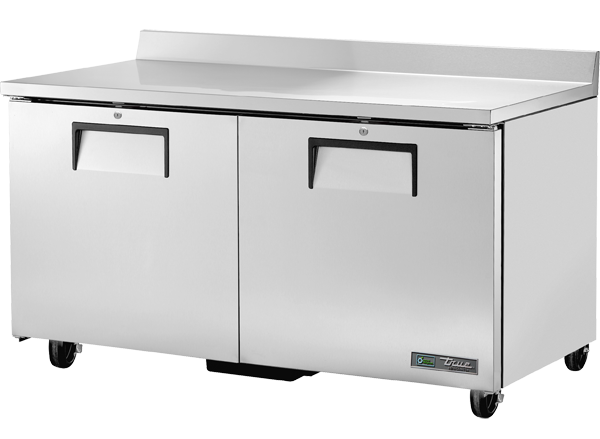
The lineup is broad. You can browse True reach-in refrigerators in one, two, and three-door configurations, True undercounter units for line stations, and True chef bases for under-grill cold storage. The True T-23-HC (one door), T-49-HC (two door), and T-72-HC (three door) are the workhorse models you will see in countless restaurant kitchens.
The downside is price. True units are typically the most expensive option in any given size class. You are paying for reliability, parts availability, and resale value.
Find True refrigerators on Zanduco
Where Traulsen Earns Its Reputation
Traulsen sits in a slightly different lane. The brand is built around heavy-duty, institutional, and high-volume kitchens: hospitals, hotel banquet operations, large catering kitchens, country clubs, and 24/7 operations where the equipment is opened hundreds of times a day and cleaned aggressively. Traulsen units are typically heavier, with thicker insulation, beefier hinges, and a build philosophy that prioritizes longevity over price.
Where True is the default for a 60-seat restaurant, Traulsen is the default for a 400-room hotel kitchen or a hospital cook-chill operation. The G Series and R Series are workhorses in this category. Traulsen also tends to offer more pass-through and roll-in configurations, which matter to bakeries running full-size sheet pan racks straight from the proofer into refrigerated storage.
Traulsen does not always offer the broadest distribution at independent restaurant supply level. You should confirm parts and service availability in your area before committing to a Traulsen unit, especially outside major metro markets. For institutional buyers with an established service contract, this is rarely a problem. For a single-location independent, it can be.
Find Traulsen refrigerators on Zanduco
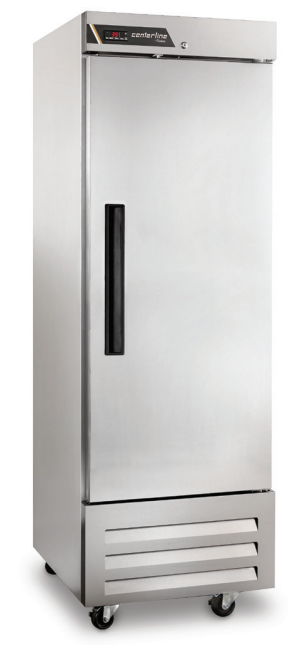
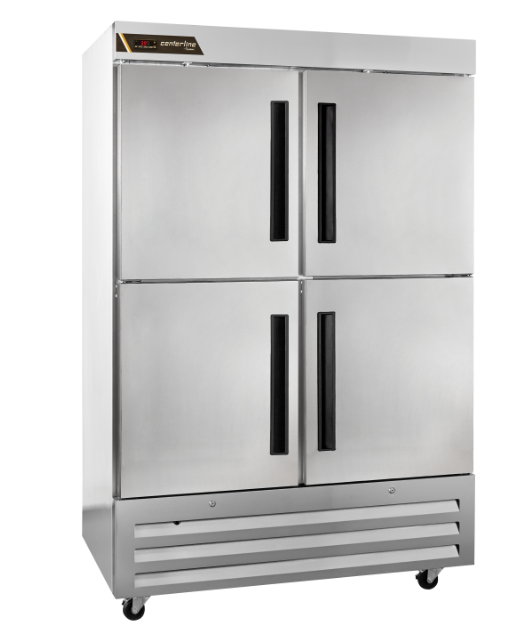
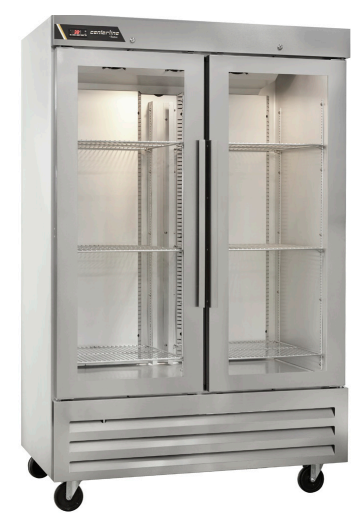


What Hoshizaki Brings to the Table
Most US foodservice operators know Hoshizaki for ice machines, and the brand's ice-making technology is legitimately a category leader. What gets less attention is that Hoshizaki has built out a serious commercial refrigeration line under the Steelheart name, with airflow engineering that quietly outperforms most competitors on uniformity.
Hoshizaki's refrigeration airflow uses a louvered duct system that distributes cold air top to bottom and at each individual shelf. Food at the back of the bottom shelf sits at almost the same temperature as food on the top shelf, which translates directly into longer shelf life for produce, dairy, and proteins. The brand is an ENERGY STAR Partner of the Year award winner, and that efficiency shows up on the utility bill.
The trade-off: Hoshizaki's refrigeration lineup is narrower than True's. You will find strong options in standard reach-ins and undercounters, but if you need a specific niche format (a 27-inch worktop, a slim chef base, a 92-inch pizza prep), True likely has it and Hoshizaki may not. Hoshizaki is also typically priced in the premium tier alongside True.
If you already own Hoshizaki ice machines and have a service relationship with a local Hoshizaki tech, adding Hoshizaki refrigeration consolidates your service contracts under one provider, which is its own kind of value.
Find Hoshizaki refrigerators on Zanduco


Where Zanduco Fits as a House-Brand Value Pick
Zanduco's house-brand commercial refrigeration sits in a different lane from the three premium names above. The brand is built around a clear value proposition: commercial-grade specs sourced directly through Zanduco's supply chain, sold without the premium markup that comes with a 70-year-old American refrigeration nameplate.
The Zanduco-branded refrigeration lineup uses R290 hydrocarbon refrigerant on most models (the same environmentally friendly refrigerant True and many other premium brands use), digital temperature controllers with LCD displays, automatic defrost, stainless steel exterior and interior construction, heavy-duty PVC-coated shelves, and bottom-mount compressor designs across most reach-ins. The 81-inch triple-door reach-in holds 72 cu. ft. with a temperature range of -8°F to 0°F on the freezer or 33°F to 41°F on the refrigerator. The 54-inch double-door reach-in covers 47 cu. ft. for mid-size kitchens. The 29-inch single-door units fit cafes, food trucks, and smaller line stations.
Honest framing: Zanduco refrigeration does not pretend to be Traulsen-grade institutional duty. Service network depth, brand recognition, and 15-to-20-year service life expectations are not the value proposition. The value proposition is solid commercial-grade refrigeration, direct sourcing, fewer middlemen, and a Zanduco team that handles your support questions directly. Expected service life sits in the 7-to-10-year range for moderate-duty restaurant use, which is the honest range for value-tier commercial refrigeration anywhere.
Zanduco is a smart pick when you are opening a new restaurant, food truck, or ghost kitchen on a startup budget. It is also a good fit when you need secondary or expansion capacity without going through full procurement, or when you already work with the Zanduco team and want direct sourcing instead of negotiating with multiple brand reps.
Find Zanduco refrigerators on Zanduco


Side-by-Side Brand Comparison

Worth Noting: Warranty terms vary by model, year, and dealer. Confirm the actual warranty document before you buy. True specifically does not provide cross-border warranties, so if you operate in both the US and Canada, you will need separate coverage for each location.
The Certifications Your Inspector Looks For
In the US, every commercial refrigerator you install needs to meet a stack of overlapping requirements. All four brands here meet them, but you should still understand what you are checking for.
NSF certification is the foodservice baseline. Every unit you install for commercial food storage should carry the NSF mark, which verifies the materials, surfaces, and design support sanitary food contact. True, Traulsen, Zanduco, and Hoshizaki all certify their commercial refrigeration to NSF standards.
UL or ETL listing verifies electrical safety. Both marks are equally valid Nationally Recognized Testing Laboratory (NRTL) certifications. Your local inspector and insurance company want to see one of them on the nameplate.
FDA Food Code temperature requirements specify that potentially hazardous foods must be held at 41°F or below. All commercial refrigerators in this comparison hold well below that threshold, but your daily logs and calibrated thermometer are what actually keep you compliant during an inspection.
ENERGY STAR certification matters for utility rebates and for total cost of ownership. Hoshizaki and certain True models carry ENERGY STAR ratings on specific SKUs. Check the spec sheet for the exact model, not the brand catalog.
DOE federal energy standards for commercial refrigerators tightened significantly in the past decade, and EPA SNAP rules govern allowable refrigerants. R290 hydrocarbon refrigerant (used by True and most Zanduco models) and HFC alternatives have largely replaced older R134A and R404A refrigerants in new equipment.
State and local health departments layer their own requirements on top. California Energy Commission (CEC) standards are stricter than federal baselines, and some Hoshizaki and True units specifically note CEC compliance. Local health departments may require specific door-closure or alarm features for certain food categories. Check with your health inspector before purchase if you operate in California, New York City, Chicago, or Seattle, where local codes are notably tighter than federal baselines.
What These Fridges Really Cost Over Five Years
The sticker price is the smallest part of the total. Here is what a typical 48-inch to 54-inch two-door reach-in refrigerator costs to own over five years, broken down by brand tier. All figures are approximate USD ranges for budgeting purposes, not quotes.
| Line item | True (premium) | Traulsen (premium-plus) | Hoshizaki (premium) | Zanduco (value) |
| Equipment purchase | $4,500 to $6,500 | $5,500 to $8,000 | $4,800 to $6,800 | $2,500 to $4,000 |
| Delivery and lift gate | $200 to $500 | $200 to $500 | $200 to $500 | $200 to $500 |
| Install (electrical, leveling, location prep) | $300 to $800 | $300 to $800 | $300 to $800 | $300 to $800 |
| Annual energy (US average, 24/7 operation) | $350 to $550 | $400 to $600 | $300 to $500 | $400 to $600 |
| Annual maintenance (coil cleaning, gasket checks) | $100 to $250 | $100 to $250 | $100 to $250 | $100 to $250 |
| Expected service calls over 5 years | $200 to $600 | $200 to $500 | $250 to $600 | $400 to $1,000 |
| 5-year total (approximate) | $7,750 to $13,000 | $9,000 to $14,800 | $7,800 to $13,200 | $5,200 to $10,000 |
Common Mistake: Buyers focus on the equipment price and ignore the energy line. A premium ENERGY STAR-qualified unit running 8,760 hours a year can save $100 to $200 annually compared to a cheaper, less efficient model. Over 10 years, that gap closes a meaningful portion of the upfront premium.
The maintenance side of this equation is in your control, and skipping it is the single biggest reason commercial refrigerators die early. The companion DIY commercial refrigerator maintenance guide on the Zanduco resources page walks through the weekly and monthly tasks that determine whether your unit makes it to year 12 or dies in year 7.
Where Each Brand Wins and Where It Falls Short
True strengths:
- Best-in-class parts availability across the US, so any commercial refrigeration tech can work on it
- Proven durability of 12 to 15 years in moderate restaurant duty
- The broadest lineup of standard reach-in formats and sizes
- Strong resale value if you eventually sell the business
- Deepest service ecosystem of any brand in this comparison
True drawbacks:
- Premium pricing ties up more capital upfront than value brands
- No cross-border warranty coverage if you operate in both the US and Canada
- Some models still use mechanical thermostats where competitors have moved to digital
Traulsen strengths:
- Built for the hardest duty cycles in the industry
- Longest expected service life of the four brands, often 15 to 20 years in institutional settings
- Excellent options for pass-through and roll-in configurations
- Brand reputation that inspires confidence in healthcare and hotel procurement
Traulsen drawbacks:
- Highest price tier of the four brands
- Service network can be thinner outside major metros
- Overkill for most independent restaurants, where you pay for duty-cycle capacity you will never use
Hoshizaki strengths:
- Best-in-class airflow uniformity, with real impact on produce and protein shelf life
- Strong ENERGY STAR efficiency, often the lowest energy bill of the four
- Consolidates service if you already use Hoshizaki ice machines
- Reputation for precision engineering and consistent build quality
Hoshizaki drawbacks:
- Narrower refrigeration lineup makes specific niche formats harder to find
- Premium pricing without the ubiquitous service network that True has
- Brand recognition in commercial refrigeration (separate from ice machines) is still building among independent operators
Zanduco strengths:
- Lowest sticker price in this comparison, with commercial-grade specs (R290, digital controls, stainless steel construction)
- Direct sourcing through Zanduco removes middleman markup and procurement complexity
- Zanduco team handles support directly, rather than routing you through brand reps and third-party techs
- Broad format coverage across reach-ins, freezers, undercounters, chef bases, back bar coolers, and merchandisers
Zanduco drawbacks:
- Shorter expected service life than premium brands, typically 7 to 10 years
- Brand recognition still building compared to 70-year-old US nameplates
- Service network is the Zanduco team rather than a nationwide third-party tech ecosystem
- Lower resale value if you exit the business
Run This Checklist Before You Order


For prep tables and chef bases, our refrigerated prep tables and salad stations buying guide covers the format-specific considerations beyond brand choice.
Climate and Kitchen Environment Considerations
Refrigeration equipment lives or dies based on the environment around it. A unit installed against a hot dishwasher exhaust will struggle no matter how good the brand. A few realities to plan around:
In hot kitchen environments (anywhere near a grill line, fryer station, or pizza oven), bottom-mount compressors are a clear winner. They pull intake air from floor level, which is cooler than air pulled from the ceiling. Top-mount compressors in a hot kitchen run constantly, shorten their own lifespan, and drive up your energy bill.
In dusty or high-grease environments (bakeries with flour dust, grills with airborne grease), monthly condenser coil cleaning matters more than which brand you bought. A clogged condenser is the number one cause of premature compressor failure in commercial refrigeration.
In southern US climates (Texas, Florida, Arizona, southern California), ambient kitchen temperatures often exceed the manufacturer's tested ambient limit during summer. Verify the unit's maximum ambient operating temperature on the spec sheet. Some commercial refrigerators are tested only to 100°F ambient; if your unconditioned prep area regularly hits 105°F in July, the unit will struggle.
In cold-climate northern markets (Minnesota, North Dakota, upstate New York), the issue flips: an undercounter installed near an exterior wall in an under-insulated space can over-cool in winter, which actually wastes energy and stresses the thermostat.
Picking the Right Brand for Your Kitchen
Buy True if you are running an independent restaurant, cafe, or bakery and you want the safe, defensible choice. You want broad parts availability, predictable service costs, and a unit that will outlast at least one lease renewal. True is the brand you can buy without doing exhaustive research and not regret.
Buy Traulsen if you are equipping a hotel kitchen, hospital, large catering operation, or any 24/7 institutional environment. You need the heaviest-duty build available, you have a service contract in place, and you are budgeting on a 15 to 20-year horizon. The premium price is justified by the duty cycle.
Buy Hoshizaki if you already use Hoshizaki ice machines, you prioritize energy efficiency, or you handle high-value produce and proteins where the airflow uniformity translates to measurable food cost savings. The brand is also a strong pick for delis, seafood operations, and high-end produce-driven kitchens.
Buy Zanduco if you are opening a new restaurant, food truck, or ghost kitchen on a startup budget and you want commercial-grade refrigeration without the premium-brand markup. It is also a reasonable second-line choice when you need backup or expansion capacity without going through procurement, or when you already work with the Zanduco team and want direct sourcing.
If You Want a Straight Answer…
If I had to pick one brand to recommend without knowing anything about your kitchen, I would pick True. It is not the cheapest. It is not the most efficient. It is not the most heavy-duty. It is the one with the highest probability of working without drama for the longest period of time, with the deepest service network in the US, and with the best resale value when you eventually replace it.
If you do know your kitchen and your operation, the picture changes. Hotel and institutional buyer with a 20-year horizon: Traulsen. Operator who values energy efficiency, airflow precision, and already uses Hoshizaki ice machines: Hoshizaki. New restaurant or food truck on a startup budget, or operator who wants direct sourcing without premium pricing: Zanduco.
There is no wrong answer among these four brands for commercial use. There are only wrong matches between brand and operation.
Where to Go From Here
If you have narrowed down the format you need, the next step is picking the right size and configuration. Browse the full commercial refrigeration lineup at Zanduco, including reach-in refrigerators, reach-in freezers, undercounter refrigerators, refrigerated prep tables, and merchandising refrigeration. If ice is also on your equipment list, the industrial ice machines buying guide walks through Hoshizaki and other ice machine options in the same way this guide walked through refrigeration. The Zanduco team handles US foodservice equipment daily and can help you size, spec, and source the right unit for your kitchen.