 Free Shipping (On select items & orders)
  Track My Order


Baking sheets are a kitchen staple, essential for everything from cookies to roasted vegetables. However, not all baking sheets are created equal. They come in a variety of materials, including aluminum, aluminized steel, and non-stick surfaces, each requiring different care and cleaning methods. Understanding the material of your baking sheet is crucial to ensure proper maintenance, longevity, and performance.
This guide provides a comprehensive overview of the most common baking sheet materials and offers practical tips on how to clean and care for them effectively. Whether you're dealing with everyday grime or stubborn, baked-on residue, we've got the solutions you need to keep your baking sheets in top condition.
Understanding Baking Sheet Materials
There is a wide range of materials used for baking sheets, from aluminum, aluminized steel, non-stick, and more. Knowing what your baking sheet is made of is important before you start cleaning it, as not all materials are dishwasher safe, and some may be more reactive than others.
Quick Reference Cleaning Chart

Natural and Effective Cleaning Methods

When you’re trying to clean your cookie sheet, there’s a wide range of cleaning options available to you. Here are some highly effective methods:
1. Baking Soda and Hydrogen Peroxide
Mixing baking soda and hydrogen peroxide to make a paste is a very effective cleaning method. However, this approach takes time to cut through grime and stains.
- Mix three parts baking soda to one part hydrogen peroxide. Adjust for general consistency as needed.
- Lather the paste on the tray and wait for two to three hours for the mixture to cut through the dirt.
- Wipe away the grime with a paper towel and water, scrubbing at any stubborn stains.
- Wash with soap and water to remove additional residue.
2. Baking Soda and Vinegar

If you made a baking soda and vinegar volcano in school, you know that there’s a powerful reaction when these two common household ingredients are combined! And you can use that reaction to help clean your baking pans.
- Using equal parts of baking soda and vinegar, first sprinkle the baking soda in an even layer across the pan.
- Add the vinegar to the tray and allow it to fizz and bubble.
- Submerge the tray in a sink with warm water for 30 to 60 minutes.
- Remove the tray and scrub gently with a non-abrasive sponge or microfiber cloth.
- Clean with regular soap and water to remove any residue.
3. Ammonia and a Garbage Bag
If you have a mess that just won't budge, this garbage bag trick is a lifesaver. It uses ammonia fumes to do the heavy lifting so you don't have to spend hours scrubbing.
- Slide your dirty baking sheets into a thick garbage bag.
- Pour in about half a cup of clear ammonia and tie the bag shut to keep the fumes trapped.
- Leave it outside or in a well-ventilated spot overnight. The fumes work to break down those tough, burnt-on bits.
- Open the bag away from your face, take the pans out, and give them a quick scrub.
- Give them a really good wash with soap and water to make sure all the ammonia is gone.
Pro Tip: When handling ammonia, ensure that you use proper protection, such as gloves and a face mask, and work in a ventilated area. Breathing in this chemical or getting it on your skin can be dangerous to your health.
4. Aluminum Foil

- Soak the baking sheet in hot water with a few drops of soap and a teaspoon of baking soda overnight.
- Remove the pan from the water mixture and dry thoroughly.
- Use balled-up aluminum foil to scrub at burnt-on food.
- Wash with soap and water to remove any caked-on residue.
7. Salt and Lemon Scrub

- Sprinkle coarse salt over the baking sheet.
- Halve a lemon and use that to scrub across the salt.
- Rinse with water thoroughly.
Advanced Cleaning Techniques
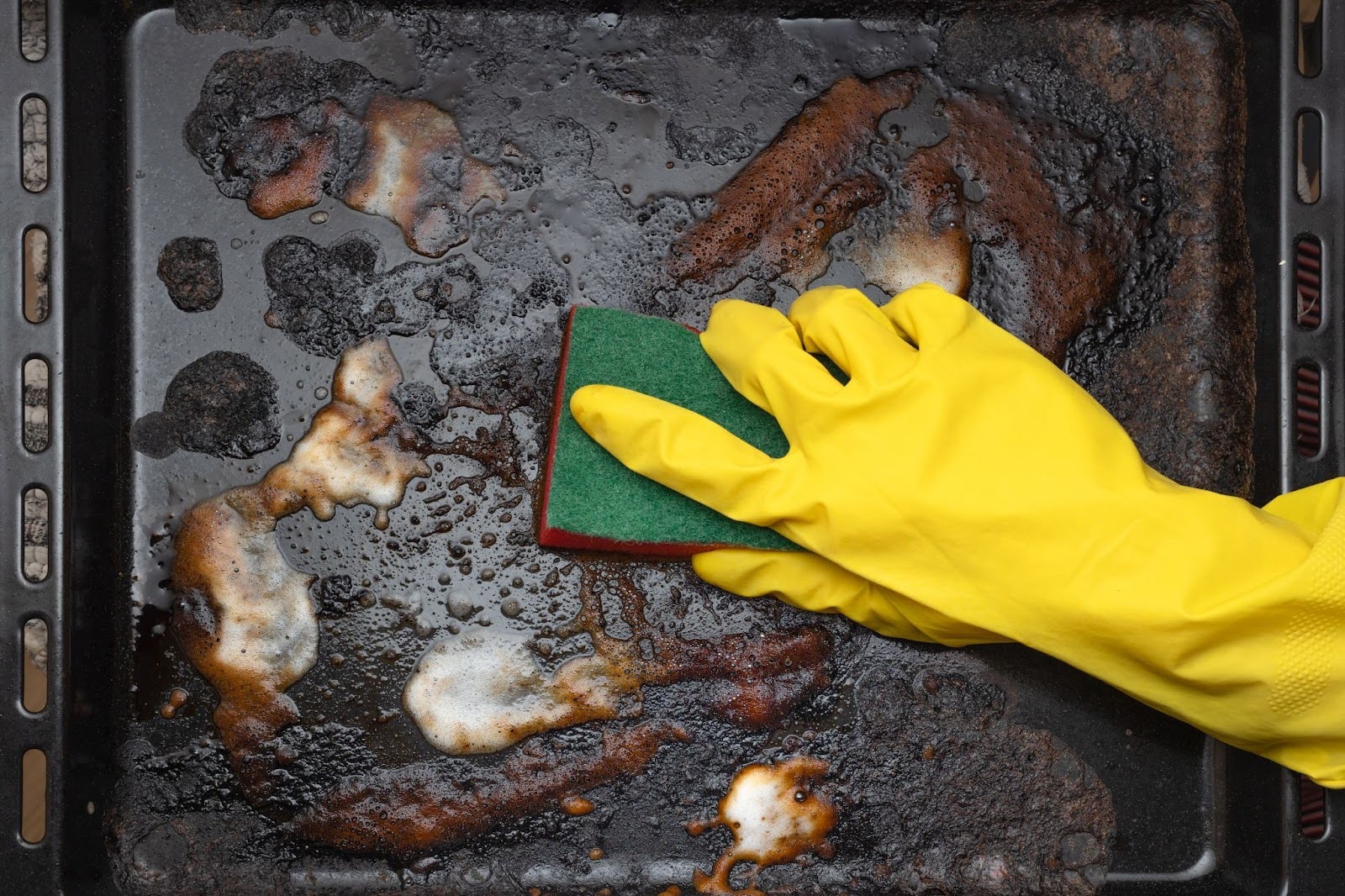
Removing Baked-On Grease

Removing Rust

Silicone Baking Mats

Invest in silicone baking mats as an alternative to aluminum foil or parchment paper. They are reusable and provide a non-stick surface, making cleanup easier.
In Search of New Baking Pans?

By following a regular cleaning routine, avoiding abrasive cleaners, and using protective measures such as silicone baking mats and proper storage techniques, you can ensure your baking sheets remain in excellent shape for years to come.
If you’re looking to add a new cookie sheet to your commercial kitchen for better and more consistent baking results, contact us today at Zanduco. We’re here to help you in all your baking endeavours.


