Free Shipping (On select items & orders)
  Track My Order


Whether you’re a busy restaurant or an up-and-coming catering company, carrying meat products can help you expand your offerings and create unique dishes. But to be able to serve a variety of items, you might find that it makes the most sense to be able to butcher and cut meat products yourself. This way the meat you offer is always fresh and extremely tasty. So many commercial establishments choose to invest in their very own commercial meat saws, enabling them to quickly and easily produce any cut of meat desired.
At Zanduco Restaurant Equipment & Supplies, we carry a number of different meat saws that offer a range of benefits depending on your needs. Below, we’ve highlighted some important facts about them and broken down the different types and styles.
What are the Different Types of Commercial Meat Saws?
The two most common types of commercial meat saws are band meat saws and meat slicers. The former is designed for much higher volumes and cutting through bone or harder meats when needed, the latter often used for slicing sandwich meats and the like. However, butcher shops will often need both types of meat saws around in order to best serve their customers.
How They Work
Band Meat Saws
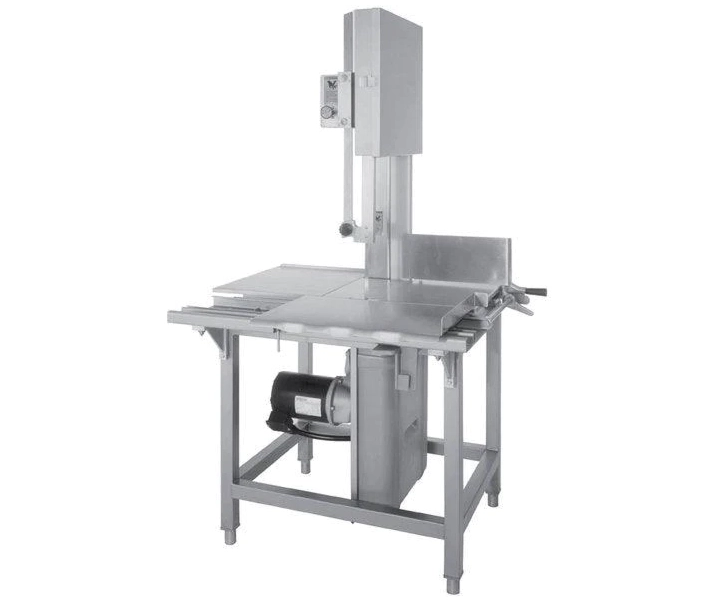
Band meat saws employ a specialized blade or band capable of cutting large quantities of meat in a short amount of time. There are two different types of meat saw blades often used with band meat saws, the first blade, also known as a butcher band saw blade, is designed to cut bones and frozen meat. The second one, referred to as a scalloped-edge band saw blade is for cutting through softer, boneless pieces of meat.
Meat Slicers
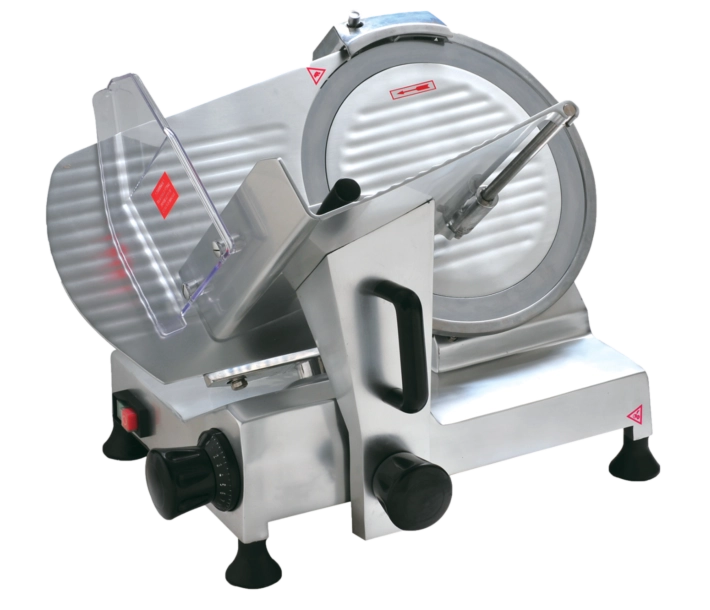
Meat slicers are actually scroll saws that use smaller blades to make more precise cuts of meat. For smaller cuts that might not be possible using the meat band saw, meat slicers are ideal, making it easy to cut things like bacon, chicken breasts, and other boneless meat products.
Why You Shouldn’t Get a Second-hand Meat Saw
It’s tempting to save money by buying used equipment, but meat saws are one piece of equipment where that decision can backfire.
Older units often have wear in places you can’t easily see, like the motor, blade guides, or safety switches. They may still run, but they won’t cut as smoothly or consistently, and that can slow prep or lead to uneven portions.
Sanitation can also be a concern. If a machine hasn’t been properly maintained, it can be difficult to clean thoroughly and bring up to food safety standards.
Another issue is parts. Replacement components for older models aren’t always easy to find, which can leave you stuck with downtime when you need the saw most.
For kitchens that depend on reliable performance and safe operation, buying new usually saves time, frustration, and unexpected repair costs down the road.
Factors to Consider When Choosing a Meat Saw
The right meat saw depends less on brand and more on how your kitchen actually works day to day.
- Bone-in or frozen meat requires a band saw, but if you mostly work with cooked or boneless cuts, a slicer will likely do the job.
- High volume kitchens and butcher operations need a strong motor and solid build that can keep up with continuous daily use.
- Choosing the right blade for bone, frozen meat, or softer cuts makes a noticeable difference in cut quality and reduces unnecessary waste.
- Features like blade guards, emergency stops, and a stable base go a long way in keeping staff safe during operation.
- Designs that come apart easily and do not trap food debris make daily cleaning quicker and help you stay on top of food safety standards.
- Make sure the saw fits your prep area comfortably and leaves staff enough room to work safely around it.
Choosing the right meat saw helps keep prep efficient, portions consistent, and your kitchen running smoothly.