Free Shipping (On select items & orders)
  Track My Order



Posted in: Meat Processing Equipment
A slicer that does not match your prep schedule will let you know inside a year. Either the motor wears out early because you asked too much of it, or you have a heavy machine sitting half-idle with money tied up in horsepower you never use.
Light, medium, and heavy duty are not grades of quality. They describe how long a machine can run before it needs to cool, and how tough a product it can take. A light duty slicer built for an hour a day will do that hour well for years. Run it for four, and you will be shopping for a replacement sooner than you planned.
So the first question is not the brand or the blade size. It is how much slicing your kitchen does on a normal day, and what you put against the blade. Once you have that, the rest of the decision falls into place.
Quick answer: Go light duty if you slice to order for an hour or two a day, medium duty if you prep ahead for two to three hours across meats and softer cheese, and heavy duty if the machine runs most of the day or has to cut hard cheese, semi-frozen meat, or high deli volume. The right tier comes down to daily run time, the products you slice, and how much a mid-service breakdown would cost you.

How much you slice decides the tier
Every slicer has a duty cycle, the amount of continuous work the motor and bearings are built to take before they need a rest. Ignore it and you are not saving money. You are moving the repair bill forward.
Two numbers tell you most of what you need. The first is total slicing time on a normal day, added up across the whole service rather than guessed at. A café slicing in short bursts might land under an hour. A deli prepping for lunch can pass three hours before noon without noticing. The second is what you cut. Room-temperature deli meat is gentle on a machine. Hard cheese, dense cured product, and anything cold and firm pushes the motor far harder, and that is where lighter machines give out.
If you are setting up a fresh prep line, our rundown of the equipment a Canadian restaurant kitchen needs from day one is a useful companion, since the slicer is rarely the only call you are making on that bench.
Buyer tip: Time your slicing across one ordinary week and write down the minutes. Most owners guess low, and that one honest number settles the tier faster than any spec sheet.
Light duty slicers
A light duty meat slicer is meant for short, on-and-off use, roughly one to two hours a day. It suits a café slicing turkey for the morning sandwiches, a bakery portioning a little deli meat, a coffee shop, or a small restaurant that cuts to order rather than in bulk.
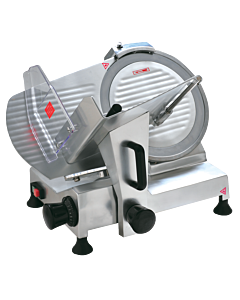
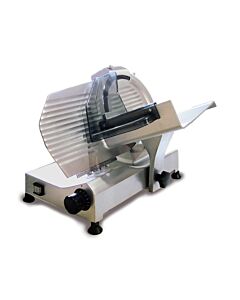
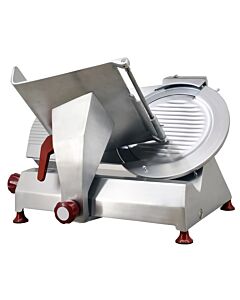
Expect a blade around 23 to 25 cm (9 to 10 in), a smaller motor in the range of 0.16 to 0.33 HP, and a belt drive that keeps the price and the noise down. Many are compact enough to live on a back counter and store away after the rush. The Zanduco 12-inch belt-driven slicer with a compact body sits at this end of the range.
The limits are worth respecting. A light duty machine is at home with soft, room-temperature meat. Hard cheese wears it down, and frozen product is not something it should touch. Guarding tends to be simpler at this price too, so train your team on the blade guard and carriage before they get comfortable.
Common mistake: choosing light duty on price, then running it three or four hours a day. The saving disappears the first time the motor burns out, and you lose service while you wait on a fix.
Medium duty slicers
Most kitchens belong here, even the ones convinced they need more. A medium duty slicer handles moderate, prep-ahead slicing in the two to three hour range. Expect a blade around 25 to 30 cm (10 to 12 in), a motor near 0.5 HP, and a sturdier build that holds a consistent slice through a long prep block.
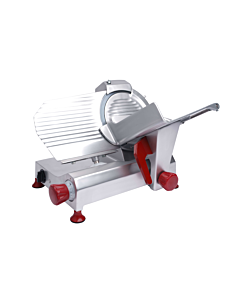
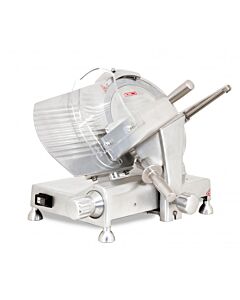
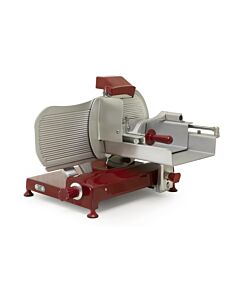
This is the tier for a working restaurant, a pizzeria portioning toppings before service, or a mid-sized deli slicing meats and the occasional softer cheese. The Zanduco 12-inch slicer (110V) is a solid general-purpose example.
Medium duty will take short stretches of cheese, though it is no cheese specialist, and frozen meat stays off the table. What you gain over light duty is breathing room. The motor is not pinned at its limit through every prep, which usually shows up as a longer working life and steadier cuts.
Heavy duty slicers
A heavy duty slicer is for kitchens where the blade hardly stops. Supermarket and grocery delis slicing all day, butcher shops working dense or very cold product, sandwich shops with real volume, and catering kitchens batching for events. If you sell meat by the pound or run continuous deli service, this is your tier.
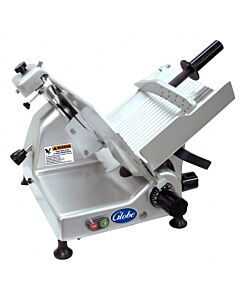
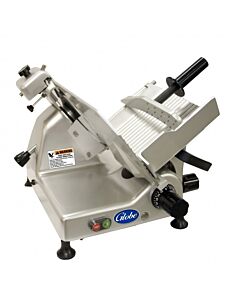
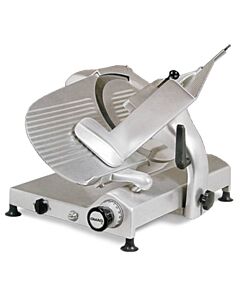
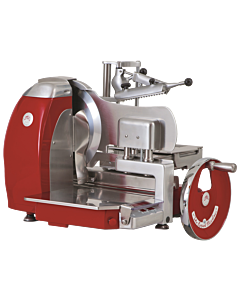
Expect larger blades, often 30 to 35 cm (12 to 14 in) and up, a stronger motor at 0.5 HP and beyond, gear drive on many models, and automatic options that slice hands-free so a team member can step away. Heavier construction copes with tougher product, including hard cheese and, on the right model, semi-frozen meat. The Zanduco 13-inch belt-driven slicer shows how blade and build scale with volume, while the manual flywheel, or volano, slicers are a category of their own for charcuterie houses.
Worth noting: an automatic machine pays you back in labour more than in raw speed. If nobody has to stand at the slicer through a 200-sandwich prep, the freed-up hours can cover the price difference faster than the spec sheet suggests.
Belt-driven and gear-driven slicers
Duty tier tells you how much machine you need. Drive type tells you how long it will survive the work, and buyers skip past it more than any other spec.
A belt-driven slicer turns the blade with a belt. It costs less, runs quieter, and suits light to moderate use without complaint. The belt is a wear part, though, and constant heavy load shortens its life.
A gear-driven slicer sends steady torque through a gear train. That is what you want for hard cheese, cold firm meat, and hours of continuous slicing, and it tends to outlast a belt under that strain. You pay more up front and live with a little more noise.
The working rule is plain. Light or medium use on everyday deli meat points to belt drive. Tough product or all-day slicing points to gear drive.

Blade size, motor, and the specs
Treat the table below as typical ranges rather than fixed rules, since brands differ.
| Spec | Light Duty | Medium Duty | Heavy Duty |
| Typical daily run time | ~1 to 2 hrs | ~2 to 3 hrs | most of the day |
| Blade size | ~23 to 25 cm (9 to 10 in) | ~25 to 30 cm (10 to 12 in) | ~30 to 35 cm (12 to 14 in)+ |
| Motor (typical) | ~0.16 to 0.33 HP | ~0.5 HP | ~0.5 HP and up |
| Drive type | usually belt | belt or gear | often gear, automatic options |
| Handles cheese | limited / not advised | short stretches | yes, including harder cheese |
| Handles frozen meat | no | no | some models, semi-frozen |
| Best fit | café, bakery, slice-to-order | restaurant, pizzeria, mid deli | supermarket deli, butcher, high volume |
Kitchen planning tip: Size the blade to the biggest item you cut, not the average one. Blade and carriage set the largest diameter you can slice, so a butcher handling whole roasts needs more reach than a deli running pre-formed loaves at the same volume.
What a slicer costs in Canada
Price moves with blade size, drive type, brand, and whether you go manual or automatic. The figures below are rough planning numbers in Canadian dollars, not quotes. The cost most buyers leave out is the price of getting the tier wrong, so it has a row of its own.
| Line item | Light Duty | Medium Duty | Heavy Duty |
| Machine (purchase) | roughly $400 to $1,500 | roughly $1,500 to $4,500 | roughly $3,500 to $8,000 (manual), $6,000 to $12,000+ (automatic) |
| Replacement blade (when needed) | around $80 to $250 | around $150 to $400 | around $200 to $600+ |
| Sharpening stones / annual service | around $100 to $300 / yr | around $150 to $400 / yr | around $250 to $600 / yr |
| Cost of under-buying | high: motor burnout plus lost service hours | moderate: faster wear if pushed | low: rarely under-spec'd |
Worth noting: a slicer draws little power, so it falls outside ENERGY STAR Canada and the gas rebate programs run by Enbridge Gas in Ontario or FortisBC in British Columbia. Budget for the machine and its upkeep on their own, and do not count on a utility credit to bring the number down.
Certification and Canadian compliance
Two things need to check out before a slicer earns its place on your counter.
The first is electrical safety. Your machine should carry a certification mark from a body accredited by the Standards Council of Canada. CSA is the name most people reach for, and it is not the only valid one. ETL, UL, and others are equally acceptable when they hold SCC accreditation for the Canadian market, so there is no reason to pay more chasing a particular logo. If that distinction is new to you, our guide to how Canadian kitchen certifications work walks through it and can save you money.
The second is sanitation. For anything touching food, inspectors expect NSF certification or an equivalent, with extra attention on equipment that meets raw meat, dairy, or allergens. Check the spec sheet for it before the machine ships, not after.
Provincial rules add the local layer. Quebec inspects with notable rigour through MAPAQ, and other provinces apply their own regional and municipal health authority standards on cleaning intervals, food-contact surfaces, and records. Federal certification gets you to the starting line. Passing your local inspection is what keeps the doors open.
Cold-climate note: Butcher-forward shops across Alberta, Manitoba, and Saskatchewan often work very cold or semi-frozen product, which is the load that finishes off a lighter motor early. If that describes your shop, lean toward gear-driven heavy duty whatever your hourly count alone suggests.
Cleaning and food safety
Cleaning is the discipline that keeps a slicer safe to use, and it is where a cheap teardown design quietly costs you. Meat slicers are among the best-documented places Listeria monocytogenes takes hold in a deli. The blade guard, the ring guard, the carriage tracks: each one traps protein and moisture, and Listeria keeps growing even under refrigeration.
Health authorities across Canada expect a slicer handling ready-to-eat food to be broken down, cleaned, and sanitized at set points through the day, often every four hours of continuous use, with a deep clean at close. That makes easy disassembly a buying criterion in its own right. A machine that fights you on teardown gets cleaned less often, and that is how a kitchen ends up failing an inspection.
Keep your cleaning and sanitizing supplies within reach of the machine, and budget for slicer accessories such as sharpening stones and spare parts so a dull edge never tempts anyone to force product through. A dull blade tears instead of slicing, wastes product, and leaves more ragged surface for bacteria to cling to.
Which slicer should you buy
If you slice to order for an hour or two and stick to deli meat, buy light duty and put the difference toward the rest of your line. If you run a typical restaurant, pizzeria, or mid-sized deli prepping ahead across meats and a little cheese, buy medium duty with confidence. That is where most Canadian kitchens land, and the spare motor capacity earns itself back in repairs you never pay for. Step up to heavy duty when the blade truly runs most of the day, or when hard cheese, semi-frozen meat, or steady deli volume are part of the job. At that point gear drive and automatic feed stop being extras and become the cheaper choice over the life of the machine.
No one regrets the slicer that matches the work in front of it. Over-buying parks your capital. Under-buying wears out the machine. Count the minutes, look at what you cut, and the answer comes into focus.
Where to start
Count your minutes, name the toughest thing you cut, and the tier comes into focus. You can browse the full range of commercial meat slicers for Canadian kitchens and narrow by light duty, medium duty, or heavy duty. If you are building out the rest of the room, pair the slicer with meat grinders and butcher equipment or a refrigerated deli case to hold prepped product at temperature. Prefer to talk it through first? Request a quote and the Zanduco team can match a machine to your volume before you commit.
Get the Right Slicer on Your Counter, Shipped Fast Across Canada
Stop overpaying for power you will not use, and stop burning out machines you have outgrown. Shop Zanduco's commercial meat slicers and get the tier that fits your volume, backed by competitive Canadian pricing, free shipping on select items, financing options, and order support that knows the gear. Not sure which model is right? Request a quote and we will spec it to your kitchen before you spend a dollar.