 Free Shipping (On select items & orders)
  Track My Order


Frequently Asked Questions
How do saute pans differ from standard fry pans in a commercial kitchen?
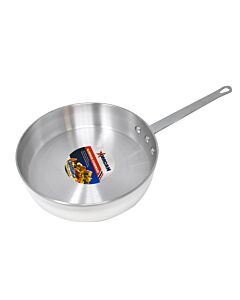
Saute pans have straight, higher sides and a flat bottom, giving them more cooking surface and better containment for liquids. Standard fry pans have sloped sides that make flipping easier.
What size of saute pans works best for restaurant portion sizes?
A 3 to 5 qt saute pan handles individual to double portions. Larger 7 to 10 qt saute pans work for family-style dishes and batch cooking.
Should I choose stainless steel or aluminum saute pans?
Stainless steel saute pans are non-reactive and induction-compatible, making them versatile for deglazing and acidic sauces. Aluminum saute pans heat faster and are lighter to handle.
Can saute pans be used for braising and finishing dishes in the oven?
Yes. Most commercial saute pans have oven-safe handles and come with covers, making them ideal for stovetop-to-oven braising and finishing techniques.
Which saute pans at Zanduco include a matching lid?
Most saute pans from Omcan include a matching cover. Having a lid is important for saute pans when braising, steaming, or reducing sauces.
Do saute pans work on induction cooktops?
Stainless steel saute pans with a magnetized base work on induction. Aluminum saute pans do not, unless they feature a layered induction-compatible bottom.
Are saute pans a good complement to brazier pans for a versatile kitchen?
Yes. Saute pans handle smaller volumes and quick cooking, while brazier pans are better for larger braising batches. Both saute pans and brazier pans are valuable for a well-rounded kitchen.

