 Free Shipping (On select items & orders)
  Track My Order




Frequently Asked Questions
What tray capacity should blast chillers have for a restaurant producing 200 covers per night?
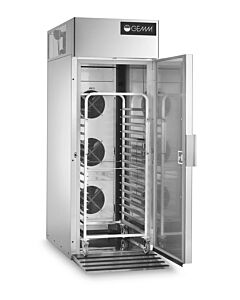
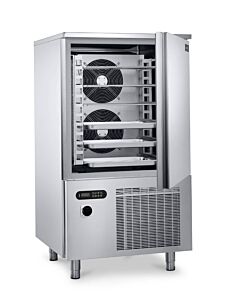
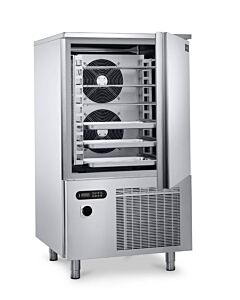
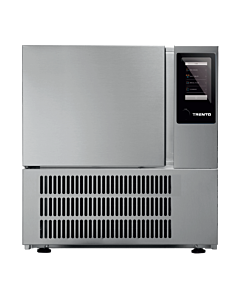
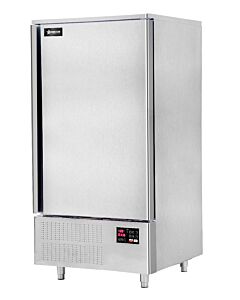
A 6- to 10-tray model handles most mid-volume kitchens. Blast chillers with higher tray counts, such as 15-tray units from Eurodib, suit large-batch operations and catering.
How quickly do blast chillers bring hot food to safe storage temperatures?
Blast chillers reduce food temperature from cooking levels to below 3øC within 90 minutes, passing through the danger zone in minutes rather than the hours a standard refrigerator would take.
Can blast chillers also function as blast freezers?
Yes. Most commercial blast chillers offer both chilling and freezing cycles. The freezing mode rapidly freezes food to \-18øC, producing smaller ice crystals that preserve texture better.
Should I choose countertop or floor-model blast chillers?
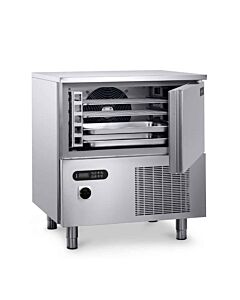
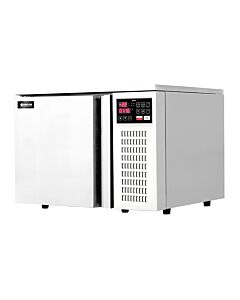
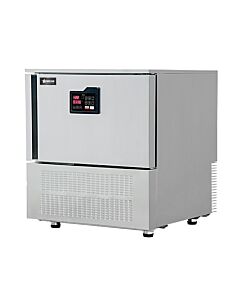
Countertop blast chillers with 3 to 5 trays work for small cafes and bakeries. Floor models with 6 or more trays suit full-service restaurants and catering kitchens where batch sizes are larger.
Do blast chillers require special electrical service?
Many larger blast chillers operate on 208-240V single-phase or three-phase power. Smaller countertop models may run on 115V. Verify the electrical requirements before purchasing blast chillers.
Are blast chillers a worthwhile investment for HACCP compliance in Canadian kitchens?
Yes. Blast chillers are one of the most effective tools for meeting HACCP rapid-cooling requirements. They provide documented, consistent temperature reduction that supports food safety compliance.

